


Page 262 - Basic Course
P. 262
KNX BASIC COURSE


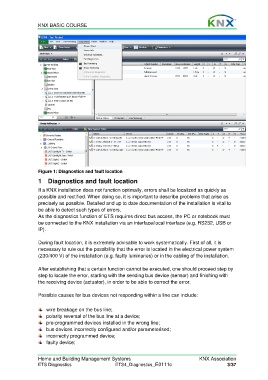
                  Figure 1: Diagnostics and fault location
                  1  Diagnostics and fault location

                  If a KNX installation does not function optimally, errors shall be localized as quickly as
                  possible and rectified. When doing so, it is important to describe problems that arise as
                  precisely as possible. Detailed and up to date documentation of the installation is vital to
                  be able to detect such types of errors.
                  As the diagnostics function of ETS requires direct bus access, the PC or notebook must
                  be connected to the KNX installation via an interface/local interface (e.g. RS232, USB or
                  IP).

                  During fault location, it is extremely advisable to work systematically. First of all, it is
                  necessary to rule out the possibility that the error is located in the electrical power system
                  (230/400 V) of the installation (e.g. faulty luminaries) or in the cabling of the installation.

                  After establishing that a certain function cannot be executed, one should proceed step by
                  step to locate the error, starting with the sending bus device (sensor) and finishing with
                  the receiving device (actuator), in order to be able to correct the error.

                  Possible causes for bus devices not responding within a line can include:

                      wire breakage on the bus line;
                      polarity reversal of the bus line at a device;
                      pre-programmed devices installed in the wrong line;
                      bus devices incorrectly configured and/or parameterised;
                     incorrectly programmed device;
                     faulty device;


                  Home and Building Management Systems                                    KNX Association
                  ETS Diagnostics                   ETS4_Diagnostics_E0111c                           3/37

