


Page 28 - MODULE QUALITY TOOLS DMQ 30262
P. 28
DMQ 30262


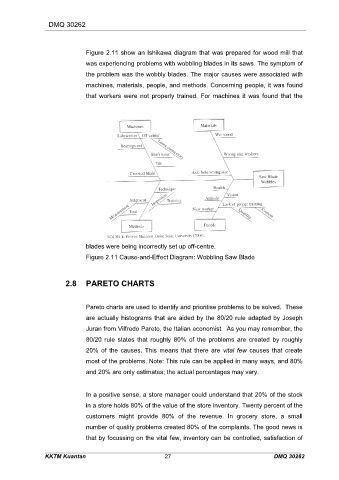
                               Figure 2.11 show an Ishikawa diagram that was prepared for wood mill that
                               was experiencing problems with wobbling blades in its saws. The symptom of
                               the problem was the wobbly blades. The major causes were associated with

                               machines, materials, people, and methods. Concerning people, it was found
                               that workers were not properly trained. For machines it was found that the


                               blades were being incorrectly set up off-centre.
                               Figure 2.11 Cause-and-Effect Diagram: Wobbling Saw Blade


                        2.8    PARETO CHARTS


                               Pareto charts are used to identify and prioritise problems to be solved. These

                               are actually histograms that are aided by the 80/20 rule adapted by Joseph
                               Juran from Vilfredo Pareto, the Italian economist. As you may remember, the

                               80/20 rule states that roughly 80% of the problems are created by roughly
                               20% of the causes. This means that there are vital few causes that create
                               most of the problems. Note: This rule can be applied in many ways, and 80%
                               and 20% are only estimates; the actual percentages may vary.


                               In a positive sense, a store manager could understand that 20% of the stock
                               in a store holds 80% of the value of the store inventory. Twenty percent of the
                               customers might provide 80% of the revenue. In grocery store, a small

                               number of quality problems created 80% of the complaints. The good news is
                               that by focussing on the vital few, inventory can be controlled, satisfaction of


                 KKTM Kuantan                              27                                    DMQ 30262

