


Page 42 - DINOSOUR ATLAS
P. 42
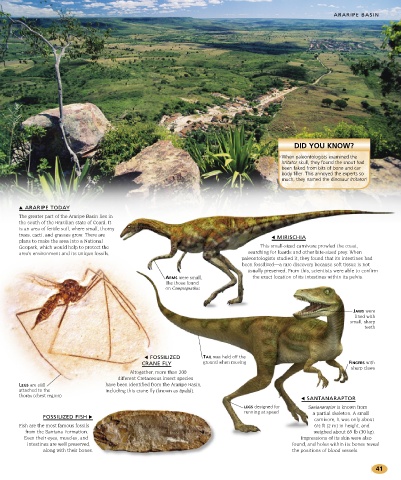
araripe basin


                                                                                                          did you know?

                                                                                                     . When paleontologists examined the
                                                                                                     Irritator skull, they found the snout had
                                                                                                     been faked from bits of bone and car
                                                                                                     body filler. This annoyed the experts so
                                                                                                     much, they named the dinosaur Irritator!


        u araripe today
        The greater part of the Araripe Basin lies in
        the south of the Brazilian state of Ceará. It
        is an area of fertile soil, where small, thorny
        trees, cacti, and grasses grow. There are                                                 , mirischia
        plans to make the area into a National
        Geopark, which would help to protect the                                              This small-sized carnivore prowled the coast,
        area’s environment and its unique fossils.                                       searching for lizards and other bite-sized prey. When
                                                                                       paleontologists studied it, they found that its intestines had
                                                                                       been fossilized—a rare discovery because soft tissue is not
                                                                                         usually preserved. From this, scientists were able to confirm
                                                            arms were small,               the exact location of its intestines within its pelvis.
                                                            like those found
                                                            on Compsognathus


                                                                                                                               Jaws were
                                                                                                                               lined with
                                                                                                                              small, sharp
                                                                                                                                   teeth


                                                     , Fossilized        Tail was held off the
                                                    crane Fly            ground when moving                                  fingers with
                                                                                                                              sharp claws
                                               Altogether, more than 200
                                           different Cretaceous insect species
        legs are still                 have been identified from the Araripe Basin,
        attached to the                including this crane fly (known as tipulid).
        thorax (chest region)
                                                                                                            , santanaraptor
                                                                                        legs designed for      Santanaraptor is known from
                                                                                        running at speed        a partial skeleton. A small
                Fossilized Fish .
                                                                                                                 carnivore, it was only about
        Fish are the most famous fossils                                                                         6½ ft (2 m) in height, and
          from the Santana Formation.                                                                            weighed about 65 lb (30 kg).
          Even their eyes, muscles, and                                                                     Impressions of its skin were also
           intestines are well preserved,                                                                found, and holes within its bones reveal
                along with their bones.                                                                  the positions of blood vessels.


                                                                                                                                       41

