


Page 35 - (DK Eyewitness) Travel Guide - Argentina
P. 35
A POR TR AIT OF ARGENTINA 33
Tango in Popular Culture
Buenos Aires is sometimes called a “tangopolis” or tango city.
Music plays on taxi drivers’ radios, graffiti is on the walls, and
even films about contemporary issues often include a track of
old tango to conjure up the capital city’s ineffable melancholy.
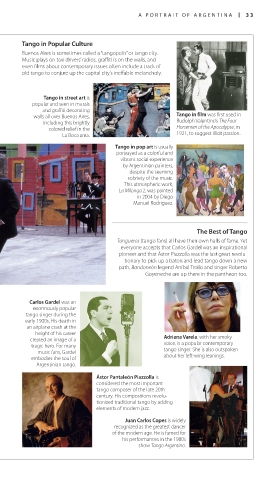
Tango in street art is
popular and seen in murals
and graffiti decorating
walls all over Buenos Aires, Tango in film was first used in
including this brightly Rudolph Valentino’s The Four
colored relief in the Horsemen of the Apocalypse, in
La Boca area. 1921, to suggest illicit passion.
Tango in pop art is usually
portrayed as a colorful and
vibrant social experience
by Argentinian painters,
despite the seeming
sobri ety of the music.
This atmospheric work,
La Milonga 2, was painted
in 2004 by Diego
Manuel Rodriguez.
The Best of Tango
Tangueros (tango fans) all have their own halls of fame. Yet
everyone accepts that Carlos Gardel was an inspira tional
pioneer and that Ástor Piazzolla was the last great revolu
tionary to pick up a baton and lead tango down a new
path. Bandoneón legend Aníbal Troilo and singer Roberto
Goyeneche are up there in the pantheon too.
Carlos Gardel was an
enormously popular
tango singer during the
early 1900s. His death in
an airplane crash at the
height of his career
created an image of a Adriana Varela, with her smoky
tragic hero. For many voice, is a popular contempo rary
music fans, Gardel tango singer. She is also out spoken
embodies the soul of about her leftwing leanings.
Argentinian tango.
Ástor Pantaleón Piazzolla is
considered the most important
tango composer of the late 20th
century. His compositions revolu
tionized traditional tango by adding
elements of modern jazz.
Juan Carlos Copes is widely
recognized as the greatest dancer
of the modern age. He is famed for
his performances in the 1980s
show Tango Argentino.
032-033_EW_Argentina.indd 33 05/08/16 10:03 am

