


Page 210 - Encyclopedia of Aquarium and Pond Fish, 3rd Edition
P. 210
208    MARINE FISH: SETTING UP THE TANK

         Siting and substrate


         There are no firm rules about where to position a
         marine aquarium in the home, but following a few
         simple guidelines will help maximize the health of the
         fish and ensure human safety. The choice of substrate
         (such as gravel or sand) greatly influences the overall
         appearance of the tank and is more than just cosmetic.
         Substrate composition directly affects water chemistry
         and so influences the long-term welfare of the fish.

         Positioning the tank
         Aquariums should never be moved if they contain water, sand,
         or gravel because their great weight makes them prone to
         shattering. The larger the tank, the longer it takes to empty
         and strip down for moving; so for marine aquariums, which
         tend to be larger than their freshwater counterparts, getting
         the location right the first time is particularly important.
           As a general rule, set up the tank in the room where you
         spend most time, and position it at eye level for the best views
         of the fish. Taller tanks provide eye-level interest whether
         seated or standing and are a good choice for compact rooms
         where there is space only for a tank with a small base. Support
         the aquarium on a specially built stand or cabinet; if you use an
         existing piece of furniture, make sure it is strong enough
         to take the weight of the filled tank and will not be damaged
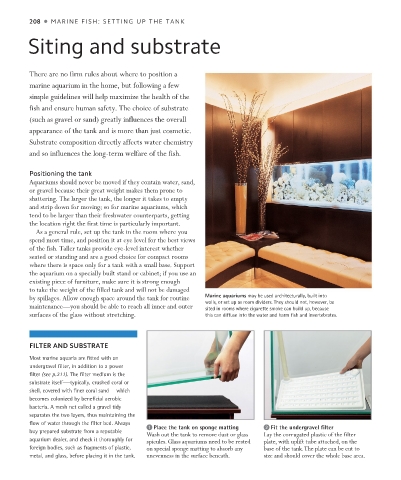
         by spillages. Allow enough space around the tank for routine   Marine aquariums may be used architecturally, built into
         maintenance—you should be able to reach all inner and outer   walls, or set up as room dividers. They should not, however, be
                                                          sited in rooms where cigarette smoke can build up, because
         surfaces of the glass without stretching.        this can diffuse into the water and harm fish and invertebrates.


         FILTER AND SUBSTRATE
         Most marine aquaria are fitted with an
         undergravel filter, in addition to a power
         filter (see p.211). The filter medium is the
         substrate itself—typically, crushed coral or
         shell, covered with finer coral sand—which
         becomes colonized by beneficial aerobic
         bacteria. A mesh net called a gravel tidy
         separates the two layers, thus maintaining the
         flow of water through the filter bed. Always    1  Place the tank on sponge matting   1  Fit the undergravel filter
                                                                          2
                                          1
         buy prepared substrate from a reputable   Wash out the tank to remove dust or glass   Lay the corrugated plastic of the filter
         aquarium dealer, and check it thoroughly for   spicules. Glass aquariums need to be rested   plate, with uplift tube attached, on the
         foreign bodies, such as fragments of plastic,   on special sponge matting to absorb any   base of the tank. The plate can be cut to
         metal, and glass, before placing it in the tank.  unevenness in the surface beneath.  size and should cover the whole base area.


   US_208-209_Sitingand_Subtrate.indd   208                                                          29/08/18   4:10 PM

