


Page 40 - Encyclopedia of Aquarium and Pond Fish, 3rd Edition
P. 40
38    FRESHWATER FISH: SETTING UP THE TANK

         Preparing the tank


         A little forethought goes a long way when setting up an aquarium.
         Give careful consideration to where you want to site the tank,
         because if you make a poor choice, you will have to empty the tank
         and strip it down before it can be moved elsewhere. It is also a
         good idea to plan the layout of the tank well in
         advance so that you end up with an aquarium
         that not only looks attractive but also allows the
         fish to display their natural behavior.

                                 One of the most important
                                 elements in the aquarium
                                 will be the substrate—the
                                 material covering the floor
                                 of the tank. This not only
                                 forms an essential part of the
                                 habitat for the fish but also
         Visualize the finished tank. Knowing   provides anchorage for the
         how you want your tank to look will   roots of aquarium plants and
         make it much easier and quicker to   a surface on which beneficial
         assemble the different elements.
                                 bacteria can develop.
           For fish that require a sandy substrate, use filtration sand
         or river sand, which are chemically inert (they do not affect
         the water) and non-compacting. However, most freshwater
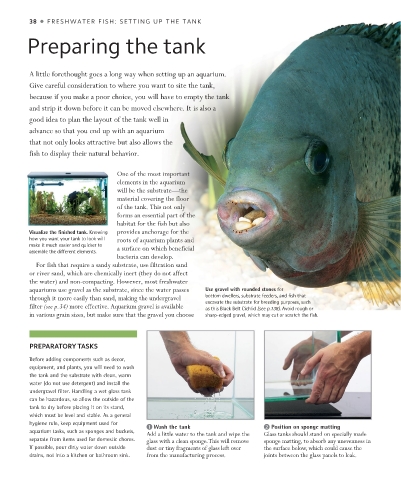
         aquariums use gravel as the substrate, since the water passes   Use gravel with rounded stones for
         through it more easily than sand, making the undergravel    bottom dwellers, substrate feeders, and fish that
         filter (see p.34) more effective. Aquarium gravel is available    excavate the substrate for breeding purposes, such
                                                          as this Black Belt Cichlid (see p.138). Avoid rough or
         in various grain sizes, but make sure that the gravel you choose   sharp-edged gravel, which may cut or scratch the fish.


         PREPARATORY TASKS
         Before adding components such as decor,
         equipment, and plants, you will need to wash
         the tank and the substrate with clean, warm
         water (do not use detergent) and install the
         undergravel filter. Handling a wet glass tank
         can be hazardous, so allow the outside of the
         tank to dry before placing it on its stand,
         which must be level and stable. As a general
         hygiene rule, keep equipment used for    1  Wash the tank         2  Position on sponge matting
                                                                          2
                                          1
         aquarium tasks, such as sponges and buckets,   Add a little water to the tank and wipe the   Glass tanks should stand on specially made
         separate from items used for domestic chores.   glass with a clean sponge. This will remove   sponge matting, to absorb any unevenness in
         If possible, pour dirty water down outside   dust or tiny fragments of glass left over   the surface below, which could cause the
         drains, not into a kitchen or bathroom sink.  from the manufacturing process.  joints between the glass panels to leak.


   US_038-039_Prep_Tank_Brackish.indd   38                                                           29/08/18   4:08 PM

