


Page 201 - Atlas Of The World's Strangest Animals
P. 201
CLEANER WRASSE             201


             eaten, because the ‘cleaning service’ they offer is much  their bold patterns and body movements. So, as the
             more valuable to their customers than a quick snack.   wrasse approach, the fish clearly signal that they want to
              Typically, wrasse operate at ‘cleaning stations’, although  be cleaned and present no threat.They do this by posing
             some make ‘house calls’ if their customers are particularly  in an ‘unnatural’ way, typically stiffening their bodies or
             territorial. Such stations can be found all over the ocean,  opening their mouths.The wrasse can then get to work
             and wrasse aren’t the only species to offer such services –  in safety.
             various cleaner shrimp and some species of gobies get in  Wrasse provide such a successful service that other fish
             on the act too. However, wrasse are one of the most    take advantage of their good reputations! The sabre-
             commonly found cleaners, operating mainly around       toothed blenny (Aspidontus taeniatus) has adapted to mimic
             tropical coral reefs in the Indian and Pacific Oceans.  the distinctive dancelike movements of the bluestreak
              For a potential prey species like the wrasse to approach  cleaner wrasse (Labroides dimidiatus). When fish present
             a large predatory fish, they have to be certain that they  themselves for cleaning, the blenny dash in, bite a chunk
             can do so safely, and each cleaning station has developed  out of their customer’s hide and then rush away before
             its own rules. It is believed that fish recognize cleaners by  they can be caught!


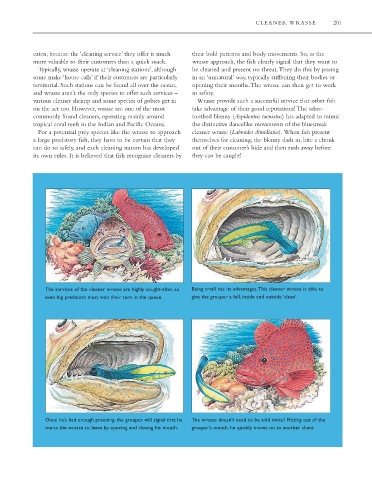
                 The services of the cleaner wrasse are highly sought-after, so  Being small has its advantages.This cleaner wrasse is able to
                 even big predators must wait their turn in the queue.  give the grouper a full, inside and outside ‘clean’.


                 Once he’s had enough preening, the grouper will signal that he  The wrasse doesn’t need to be told twice! Flitting out of the
                 wants the wrasse to leave by opening and closing his mouth.  grouper’s mouth, he quickly moves on to another client.


                                             (c) 2011 Marshall Cavendish. All Rights Reserved.

