


Page 174 - (DK Eyewitness) Travel Guide - The Netherlands
P. 174
172 WESTERN NE THERLANDS
Dunes
The Dutch coast is famous for its dunes. These
natural sea walls, with a vegetation of their own,
were used in earlier times as common ground
for cattle grazing (the oerol, see p278) in the
absence of sufficient grassland. They now play
an important role in the purification of water.
The dunes are also a particularly popular
recreational area – many of the protected dune
areas are open to ramblers and cyclists.
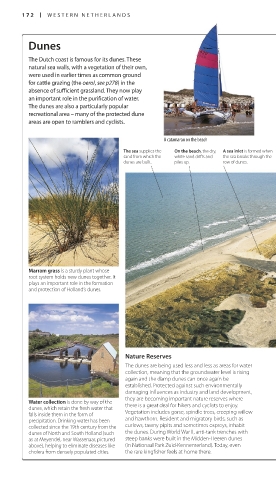
A catamaran on the beach
The sea supplies the On the beach, the dry, A sea inlet is formed when
sand from which the white sand drifts and the sea breaks through the
dunes are built. piles up. row of dunes.
Marram grass is a sturdy plant whose
root system holds new dunes together. It
plays an important role in the formation
and protection of Holland’s dunes.
Nature Reserves
The dunes are being used less and less as areas for water
collection, meaning that the groundwater level is rising
again and the damp dunes can once again be
established. Protected against such environmentally
damaging influences as industry and land development,
they are becoming important nature reserves where
Water collection is done by way of the
dunes, which retain the fresh water that there is a great deal for hikers and cyclists to enjoy.
falls inside them in the form of Vegetation includes gorse, spindle trees, creeping willow
precipitation. Drinking water has been and hawthorn. Resident and migratory birds, such as
collected since the 19th century from the curlews, tawny pipits and sometimes ospreys, inhabit
dunes of North and South Holland (such the dunes. During World War II, anti-tank trenches with
as at Meyendel, near Wassenaar, pictured steep banks were built in the Midden-Heeren dunes
above), helping to eliminate diseases like (in Nationaal Park Zuid-Kennemerland). Today, even
cholera from densely populated cities. the rare kingfisher feels at home there.
172-173_EW_Netherlands.indd 172 16/01/17 12:04 pm
Eyewitness Travel LAYERS PRINTED:
Feature template “UK” LAYER
(SourceReport v1.3)
Date 18th October 2012
Size 125mm x 217mm

