


Page 259 - (DK) Ocean - The Definitive Visual Guide
P. 259
ANIMAL LIFE       257


             Reproduction                                                                                      SINGLE PARENT
                                                                                                               This sea anemone is budding off
             Animals reproduce in two ways. In asexual reproduction, which occurs                              young that will eventually take
             in many marine animals from flatworms to sea anemones, a single parent                            up life on their own. Asexual
                                                                                                               reproduction is quick and simple,
             divides in two, or grows (buds off) parts that become independent. In                             but it does not produce genetic
             sexual reproduction, the eggs of one parent are fertilized by the sperm                           variation, making it more difficult
             of another. Sessile animals, such as corals and clams, usually breed                              for a species to adapt to change.
             sexually by shedding their eggs and sperm into the water, leaving them
             to meet by chance. In some fish, all mammals, and birds, fertilization
                                      is internal, which means that the two                                        SEA SYMPHONY
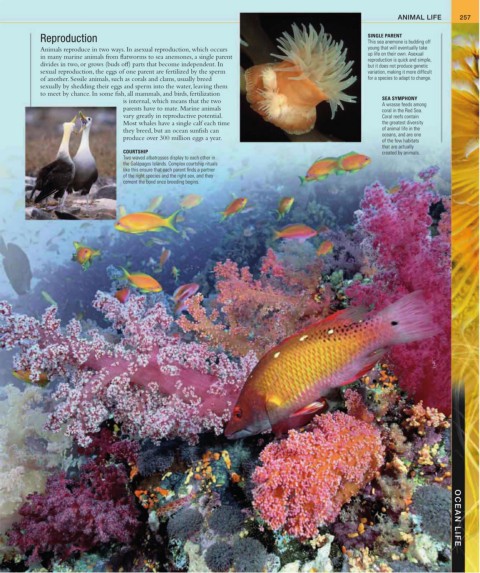
                                                                                                                   A wrasse feeds among
                                      parents have to mate. Marine animals                                         coral in the Red Sea.
                                      vary greatly in reproductive potential.                                      Coral reefs contain
                                      Most whales have a single calf each time                                     the greatest diversity
                                      they breed, but an ocean sunfish can                                         of animal life in the
                                      produce over 300 million eggs a year.                                        oceans, and are one
                                                                                                                   of the few habitats
                                                                                                                   that are actually
                                      COURTSHIP                                                                    created by animals.
                                      Two waved albatrosses display to each other in
                                      the Galápagos Islands. Complex courtship rituals
                                      like this ensure that each parent finds a partner
                                      of the right species and the right sex, and they
                                      cement the bond once breeding begins.                                                              OCEAN LIFE

