


Page 471 - (DK) Ocean - The Definitive Visual Guide
P. 471
A B C D E F 469
140˚W 130˚W 120˚W 110˚W 100˚W
Eureka
SCALE
Mendocino Fracture Zone
Delgada Sacramento 0 100 200 300 400 500 km
Fan
1 Colorado 0 100 200 300 400 500 miles 1
Pioneer Fracture Zone
San Francisco
5,561m
(18,246ft)
Monterey
Monterey UNITED STATES
Fan
OF
AMERICA
Murray Fracture Zone Channel Islands
Los Angeles
Erben 30˚N
30˚N
Tablemount Fieberling San Diego
Tablemount Patton Escarpment Tijuana
2 Moonless Mountains 2
1,468m
(4,817ft)
Isla Guadalupe Cedros Guaymas
Isla
PA CIFIC Punta B a j a C a l i f o r n i a
Eugenia Gulf of California MEXICO
516m
(1,693ft) Tropic of Cancer
Tropic of Cancer
OCEAN Cedros Trench Mazatlán
Molokai Fracture Zone La Paz
3 Cabo 3
San Lucas
Puerto
20˚N 20˚N
Vallarta
28m
(92ft)
Revillagigedo Islands Rivera Fracture Zone Middle
Alphecca
Clarion Fracture Zone Seamount Clarion America
Trench
Island
Shimada Mathematicians Orozco Fracture
Seamount Seamounts
4 Zone Pacif 4
457m Seamount East
(1,499ft) Khayyam ic Rise
140˚W 130˚W 120˚W 110˚W
A B C D E F
Gulf of California PACIFIC OCEAN C1 PACIFIC OCEAN E2
Monterey Bay Gulf of California
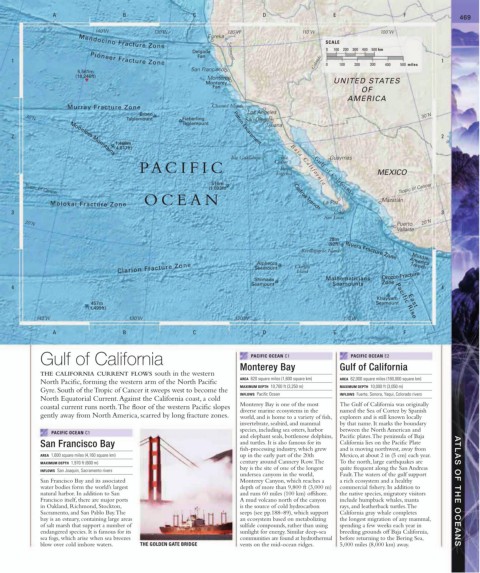
THE CALIFORNIA CURRENT FLOWS south in the western
AREA 620 square miles (1,600 square km) AREA 62,000 square miles (160,000 square km)
North Pacific, forming the western arm of the North Pacific
MAXIMUM DEPTH 10,700 ft (3,250 m) MAXIMUM DEPTH 10,000 ft (3,050 m)
Gyre. South of the Tropic of Cancer it sweeps west to become the
INFLOWS Pacific Ocean INFLOWS Fuerte, Sonora, Yaqui, Colorado rivers
North Equatorial Current. Against the California coast, a cold
coastal current runs north. The floor of the western Pacific slopes Monterey Bay is one of the most The Gulf of California was originally
diverse marine ecosystems in the named the Sea of Cortez by Spanish
gently away from North America, scarred by long fracture zones. world, and is home to a variety of fish, explorers and is still known locally
invertebrate, seabird, and mammal by that name. It marks the boundary
species, including sea otters, harbor between the North American and
PACIFIC OCEAN C1
and elephant seals, bottlenose dolphins, Pacific plates. The peninsula of Baja
San Francisco Bay and turtles. It is also famous for its California lies on the Pacific Plate
fish-processing industry, which grew and is moving northwest, away from
AREA 1,600 square miles (4,160 square km) up in the early part of the 20th Mexico, at about 2 in (5 cm) each year.
MAXIMUM DEPTH 1,970 ft (600 m) century around Cannery Row. The To the north, large earthquakes are
bay is the site of one of the longest quite frequent along the San Andreas
INFLOWS San Joaquin, Sacramento rivers
undersea canyons in the world, Fault. The waters of the gulf support
San Francisco Bay and its associated Monterey Canyon, which reaches a a rich ecosystem and a healthy
water bodies form the world’s largest depth of more than 9,800 ft (3,000 m) commercial fishery. In addition to
natural harbor. In addition to San and runs 60 miles (100 km) offshore. the native species, migratory visitors ATLAS OF THE OCEANS
Francisco itself, there are major ports A mud volcano north of the canyon include humpback whales, manta
in Oakland, Richmond, Stockton, is the source of cold hydrocarbon rays, and leatherback turtles. The
Sacramento, and San Pablo Bay. The seeps (see pp.188–89), which support California gray whale completes
bay is an estuary, containing large areas an ecosystem based on metabolizing the longest migration of any mammal,
of salt marsh that support a number of sulfide compounds, rather than using spending a few weeks each year in
endangered species. It is famous for its sunlight for energy. Similar deep-sea breeding grounds off Baja California,
sea fogs, which arise when sea breezes communities are found at hydrothermal before returning to the Bering Sea,
blow over cold inshore waters. THE GOLDEN GATE BRIDGE vents on the mid-ocean ridges. 5,000 miles (8,000 km) away.

