


Page 152 - (DK) Home Doctor: Providing practical advice on home treatments
P. 152
150 COMMON CONDITIONS: PROBLEMS IN BABIES

         Rashes and skin problems


              Young babies have sensitive skin that is susceptible to pimples and
                                                                            WARNING
              rashes. Most rashes, such as the tiny white spots (milia) seen on
              the nose and cheeks of newborn babies, are harmless and clear up  Seek immediate medical help if
                                                                     your baby has a rash and is:
              quickly. However, a rash may be due to a disorder such as eczema,
                                                                     ● Drowsy or floppy and dislikes
              or an infectious illness, such as chicken pox, measles, or meningitis.
                                                                     being touched or held
                                                                     ● Has a fever, a high-pitched cry,
              See also Rubella, p.27; Measles, p.29; Chicken pox, p.32;
                                                                     and/or is vomiting or refusing food
              Eczema, p.38; Heat rash, pp.46–47; Diaper rash, p.152.

              See your doctor first
                                                                PRACTICAL TECHNIQUE
              Make an appointment to see your doctor if:
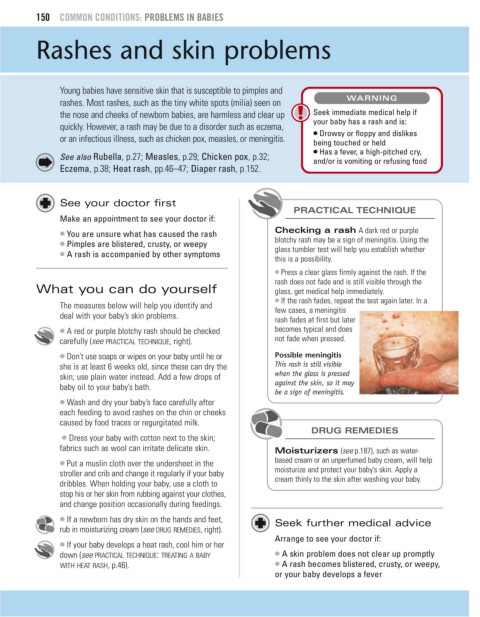
                                                            Checking a rash A dark red or purple
              ● You are unsure what has caused the rash
                                                            blotchy rash may be a sign of meningitis. Using the
              ● Pimples are blistered, crusty, or weepy
                                                            glass tumbler test will help you establish whether
              ● A rash is accompanied by other symptoms
                                                            this is a possibility.
                                                            ● Press a clear glass firmly against the rash. If the
                                                            rash does not fade and is still visible through the
         What you can do yourself                           glass, get medical help immediately.
                                                            ● If the rash fades, repeat the test again later. In a
              The measures below will help you identify and  few cases, a meningitis
              deal with your baby’s skin problems.
                                                            rash fades at first but later
              ● A red or purple blotchy rash should be checked  becomes typical and does
              carefully (see PRACTICAL TECHNIQUE, right).   not fade when pressed.
              ● Don’t use soaps or wipes on your baby until he or  Possible meningitis
              she is at least 6 weeks old, since these can dry the  This rash is still visible
              skin; use plain water instead. Add a few drops of  when the glass is pressed
              baby oil to your baby’s bath.                 against the skin, so it may
                                                            be a sign of meningitis.
              ● Wash and dry your baby’s face carefully after
              each feeding to avoid rashes on the chin or cheeks
              caused by food traces or regurgitated milk.
                                                                    DRUG REMEDIES
              ● Dress your baby with cotton next to the skin;
              fabrics such as wool can irritate delicate skin.  Moisturizers (see p.187), such as water-
              ● Put a muslin cloth over the undersheet in the  based cream or an unperfumed baby cream, will help
                                                            moisturize and protect your baby’s skin. Apply a
              stroller and crib and change it regularly if your baby
                                                            cream thinly to the skin after washing your baby.
              dribbles. When holding your baby, use a cloth to
              stop his or her skin from rubbing against your clothes,
              and change position occasionally during feedings.
              ● If a newborn has dry skin on the hands and feet,
                                                            Seek further medical advice
              rub in moisturizing cream (see DRUG REMEDIES, right).
                                                            Arrange to see your doctor if:
              ● If your baby develops a heat rash, cool him or her
              down (see PRACTICAL TECHNIQUE: TREATING A BABY  ● A skin problem does not clear up promptly
              WITH HEAT RASH, p.46).                        ● A rash becomes blistered, crusty, or weepy,
                                                            or your baby develops a fever

