


Page 154 - (DK) Home Doctor: Providing practical advice on home treatments
P. 154
152 COMMON CONDITIONS: PROBLEMS IN BABIES

         Diaper rash


              Nearly all babies are affected by diaper rash at some time, usually due to urine and feces irritating the skin
              where it is in direct contact with the soiled diaper. Leaving a baby in a wet or soiled diaper for too long can
              cause diaper rash, as can a bout of diarrhea. Sometimes the rash is a reaction to new foods in the diet. If
              your baby has diaper rash, the diaper area will look red and sore, and your baby may be irritable. If the rash
              becomes infected, it may affect the whole diaper area, including the skin creases around the groin. It will
              then have a red, glistening appearance with pus-filled pimples and will be extremely sore.


              See your doctor first
                                                                PRACTICAL TECHNIQUE
              Make an appointment to see your doctor if:
              ● The diaper rash looks infected or the skin   Diaper changing Adopt this diaper
              is broken, cracked, or bleeding               changing routine while your baby has diaper rash
              ● Your baby has a fever                       to help sore skin heal and prevent recurrences.
                                                            ● When changing the diaper, first wipe away any
                                                            feces using a dry tissue or cotton balls, and then
                                                            pour or spray warm water over the area and wipe
         What you can do yourself                           again. Dab dry with a soft towel.
                                                            ● Let your baby kick without a diaper on the
              There are several measures you can take to treat  changing mat for about 10 minutes to expose his or
              diaper rash and prevent infection. Most cases  her skin to the air. This helps prevent fungal infections
              of diaper rash clear up in 3–4 days.          that thrive in dark, damp, warm areas of the body.
                                                                ● Protect your baby’s skin by applying a barrier
              ● Change your baby’s diaper often to prevent skin
              irritation (see PRACTICAL TECHNIQUE, right). Newborn  cream, such as zinc oxide cream (see DRUG
              babies will need a diaper change at every feeding   REMEDIES, below) before putting on a fresh diaper.
                                                            ● Use a gel disposable diaper that draws away
              (at least six a day). While your baby has a rash,  wetness from your
              change the diaper even more frequently.
                                                            baby’s skin.
              ● Don’t use perfumed skin products or baby wipes,
              which may contain ingredients that sting sore skin,
              or soaps, which remove the natural oils from the
              skin, leaving it more prone to dryness and cracking.
              ● Wash fabric diapers with a nonallergenic laundry
              detergent and rinse well.
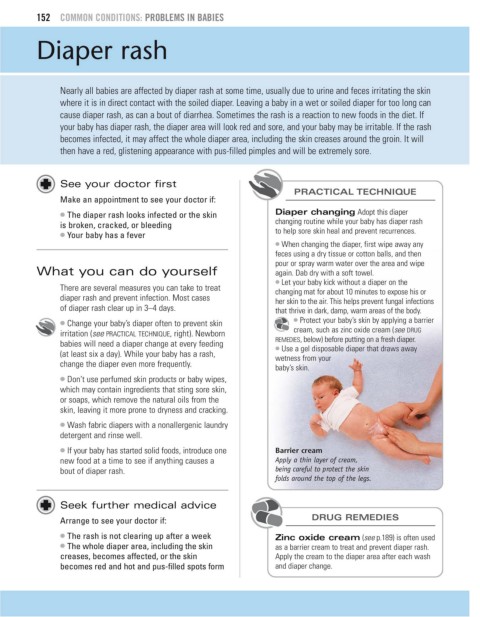
              ● If your baby has started solid foods, introduce one  Barrier cream
              new food at a time to see if anything causes a  Apply a thin layer of cream,
              bout of diaper rash.                          being careful to protect the skin
                                                            folds around the top of the legs.


              Seek further medical advice
                                                                    DRUG REMEDIES
              Arrange to see your doctor if:
              ● The rash is not clearing up after a week    Zinc oxide cream (see p.189) is often used
              ● The whole diaper area, including the skin   as a barrier cream to treat and prevent diaper rash.
              creases, becomes affected, or the skin        Apply the cream to the diaper area after each wash
              becomes red and hot and pus-filled spots form  and diaper change.

