


Page 233 - Inventions - A Visual Encyclopedia (DK - Smithsonian)
P. 233
CHLOROFORM
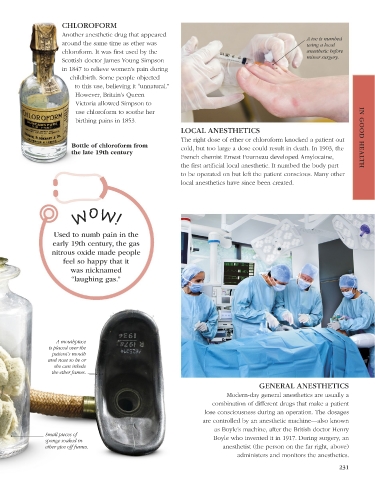
                     Another anesthetic drug that appeared                                           A toe is numbed
                     around the same time as ether was                                               using a local
                     chloroform. It was first used by the                                            anesthetic before
                     Scottish doctor James Young Simpson                                             minor surgery.
                     in 1847 to relieve women’s pain during
                        childbirth. Some people objected
                         to this use, believing it “unnatural.”
                          However, Britain’s Queen
                          Victoria allowed Simpson to
                          use chloroform to soothe her
                          birthing pains in 1853.
                                                            LOCAL ANESTHETICS
                                                            The right dose of ether or chloroform knocked a patient out   IN GOOD HEALTH
                        Bottle of chloroform from           cold, but too large a dose could result in death. In 1903, the
                        the late 19th century
                                                            French chemist Ernest Fourneau developed Amylocaine,
                                                            the first artificial local anesthetic. It numbed the body part
                                                            to be operated on but left the patient conscious. Many other
                                                            local anesthetics have since been created.


                         WOW!


                   Used to numb pain in the
                  early 19th century, the gas
                  nitrous oxide made people
                      feel so happy that it
                        was nicknamed
                        “laughing gas.”


                   A mouthpiece
                 is placed over the
                  patient’s mouth
                 and nose so he or
                   she can inhale
                  the ether fumes.

                                                                                      GENERAL ANESTHETICS
                                                                           Modern-day general anesthetics are usually a
                                                                      combination of different drugs that make a patient
                                                                    lose consciousness during an operation. The dosages
                                                                   are controlled by an anesthetic machine—also known
                                                                       as Boyle’s machine, after the British doctor Henry
                Small pieces of                                        Boyle who invented it in 1917. During surgery, an
                sponge soaked in
                ether give off fumes.                                     anesthetist (the person on the far right, above)
                                                                               administers and monitors the anesthetics.
                                                                                                                231


   US_230-231_Anaesthetics_Main.indd   231                                                                       08/03/18   3:10 PM

