


Page 33 - (DK Eyewitness) Travel Guide: Japan
P. 33
A POR TR AIT OF JAP AN 31
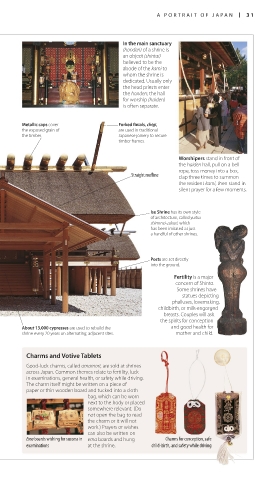
In the main sanctuary
(honden) of a shrine is
an object (shintai)
believed to be the
abode of the kami to
whom the shrine is
dedicated. Usually only
the head priests enter
the honden; the hall
for worship (haiden)
is often separate.
Metallic caps cover Forked finials, chigi,
the exposed grain of are used in traditional
the timber. Japan ese joinery to secure
timber frames.
Worshipers stand in front of
the haiden hall, pull on a bell
rope, toss money into a box,
Straight roofline clap three times to summon
the resident kami, then stand in
silent prayer for a few moments.
Ise Shrine has its own style
of architecture, called yuitsu
shimmei-zukuri, which
has been imitated at just
a handful of other shrines.
Posts are set directly
into the ground.
Fertility is a major
concern of Shinto.
Some shrines have
statues depicting
phalluses, lovemaking,
childbirth, or milk-engorged
breasts. Couples will ask
the spirits for conception
About 13,000 cypresses are used to rebuild the and good health for
shrine every 20 years on alternating, adjacent sites. mother and child.
Charms and Votive Tablets
Good-luck charms, called omamori, are sold at shrines
across Japan. Common themes relate to fertility, luck
in examinations, general health, or safety while driving.
The charm itself might be written on a piece of
paper or thin wooden board and tucked into a cloth
bag, which can be worn
next to the body or placed
somewhere relevant. (Do
not open the bag to read
the charm or it will not
work.) Prayers or wishes
can also be written on
Ema boards wishing for success in ema boards and hung Charms for conception, safe
examinations at the shrine. child-birth, and safety while driving
030-031_EW_Japan.indd 31 08/08/16 3:05 pm

