


Page 39 - (DK Eyewitness) Travel Guide: Japan
P. 39
A POR TR AIT OF JAP AN 37
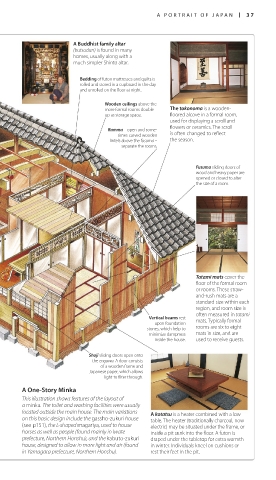
A Buddhist family altar
(butsudan) is found in many
homes, usually along with a
much simpler Shinto altar.
Bedding of futon mattresses and quilts is
rolled and stored in a cupboard in the day
and unrolled on the floor at night.
Wooden ceilings above the
more formal rooms double The tokonoma is a wooden-
up as storage space. floored alcove in a formal room,
used for displaying a scroll and
flowers or ceramics. The scroll
Ramma – open and some-
times carved wooden is often changed to reflect
lintels above the fusuma – the season.
separate the rooms.
Fusuma sliding doors of
wood and heavy paper are
opened or closed to alter
the size of a room.
Tatami mats cover the
floor of the formal room
or rooms. These straw-
and-rush mats are a
standard size within each
region, and room size is
often measured in tatami
Vertical beams rest
upon foundation mats. Typically formal
stones, which help to rooms are six to eight
minimize dampness mats in size, and are
inside the house. used to receive guests.
Shoji sliding doors open onto
the engawa. A door consists
of a wooden frame and
Japanese paper, which allows
light to filter through.
A One-Story Minka
This illustration shows features of the layout of
a minka. The toilet and washing facilities were usually
located outside the main house. The main variations A kotatsu is a heater combined with a low
on this basic design include the gassho-zukuri house table. The heater (traditionally charcoal, now
(see p151), the L-shaped magariya, used to house electric) may be situated under the frame, or
horses as well as peo ple (found mainly in Iwate inside a pit sunk into the floor. A futon is
prefecture, Northern Honshu), and the kabuto-zukuri draped under the tabletop for extra warmth
house, designed to allow in more light and air (found in winter. Individuals kneel on cushions or
in Yamagata prefecture, Northern Honshu). rest their feet in the pit.
036-037_EW_Japan.indd 37 08/08/16 3:05 pm

