


Page 43 - (DK Eyewitness) Travel Guide: Japan
P. 43
A POR TR AIT OF JAP AN 41
Bunraku
Bunraku puppets are about 1.2 m (4 ft) tall with carved wooden
heads, movable hands, and elaborate costumes. The main
puppeteer wears traditional formal dress; his two assistants,
one on each side, are clothed in black.
Shamisen music accompanies the action,
and a nar rator both tells the story and
speaks all the parts. Many Kabuki plays
were originally written for puppets;
Kabuki actors were popular Bunraku has in turn borrowed a
subjects for Edo-era woodblock number of Kabuki dramas.
prints. The tradition can still be
seen in this modern poster Bunraku puppet with his puppeteer
advertising a Kabuki play.
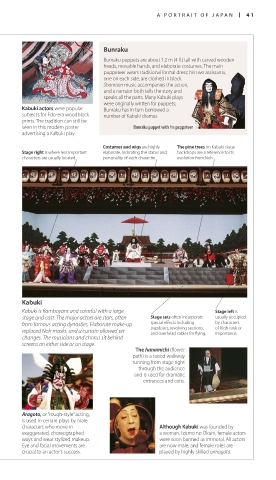
Costumes and wigs are highly The pine trees on Kabuki stage
Stage right is where less important elaborate, indicating the status and backdrops are a reference to its
characters are usually located. personality of each character. evolution from Noh.
Kabuki
Kabuki is flamboyant and colorful with a large Stage left is
stage and cast. The major actors are stars, often Stage sets often incorporate usually occupied
from famous acting dynasties. Elaborate make-up special effects including by characters
of high rank or
trapdoors, revolving sections,
replaced Noh masks, and a curtain allowed set and overhead cables for flying. importance.
changes. The musicians and chorus sit behind
screens on either side or on stage.
The hanamichi (flower
path) is a raised walkway
running from stage right
through the audience
and is used for dramatic
entrances and exits.
Aragoto, or “rough-style” acting,
is used in certain plays by male
characters who move in Although Kabuki was founded by
exaggerated, choreographed a woman, Izumo no Okuni, female actors
ways and wear stylized makeup. were soon banned as immoral. All actors
Eye and facial movements are are now male, and female roles are
crucial to an actor’s success. played by highly skilled onnagata.
040-041_EW_Japan.indd 41 08/08/16 3:05 pm

