


Page 40 - Human Environment Interface (3)
P. 40
Learning Intermittent Strategy

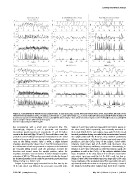
Figure 3. Typical data of failed and successful trials. In each panel, top, second, third and bottom traces show, respectively, tilt angle of the
virtual inverted pendulum h, CoPAP of subjects, active torque TTA and active torque TMG. A and D: Failed (#1) and successful (#14) trials in Subject 4
(continuous type). B and E: Failed (#1) and successful (#27) trials in Subject 2 (one-sided intermittent type). C and F: Failed (#1) and successful (#29)
trials in Subject 9 (two-sided intermittent type).
doi:10.1371/journal.pone.0062956.g003

but accompanied with a small tonic component (Fig. 3A).                  Subjects 2 and 9 (one-sided and two-sided intermittent types), on
Contrastingly, Subjects 2 and 9 (one-sided and two-sided                 the other hand, failed repeatedly, but eventually succeeded in
intermittent types) experienced, respectively, 17 and 20 failure         three trials (Table 2). For each subject, sway angle h of the virtual
events in the first trial (Figs. 3B and C). For each failure event, the  inverted pendulum during successful trials was maintained around
pendulum started falling backward (or forward) from the initial          the upright position (h~0). However, they exhibited qualitatively
condition for a period of time, during which those subjects did not      different sway patterns. In Subject 4 (continuous type), sway of the
react to the falling motion. After a while, a single delayed             pendulum, and also CoPAP sway of the subject, varied within
impulsive, short-lived for about 1.0 s, TA (or MG) activation from       relatively small ranges (std of h*0.025 rad). Moreover, they
the null activation level was generated in response to the backward      involved high frequency oscillatory components. Contrastingly, in
(or forward) falling motion until the pendulum reversed the              Subjects 2 and 9 (one-sided and two sided intermittent types), the
direction and moved across the upright position, where the               pendulum as well as the CoPAP of the subjects exhibited slow
impulsive activation was terminated. Another delayed impulsive           sway. Amplitude of the slow sway of h in Subject 2 (one-sided
activation of MG (or TA) was then generated to brake the forward         intermittent type) was small (std of h*0.015 rad), but that in
(or backward) motion, but it could not prevent the pendulum from         Subject 9 (two-sided intermittent type) was large (std: 0.036 rad).
falling, leading to a failure event.                                     Sway amplitudes of the pendulum (std of h) in successful trials were
                                                                         significantly smaller than those in early stage of learning in most of
   Subject 4 (continuous type) succeeded for the first time by the       the subjects, including other subjects than those three represen-
10-th trial, which was followed by consecutive successful trials.

PLOS ONE | www.plosone.org                                               7 May 2013 | Volume 8 | Issue 5 | e62956

