


Page 43 - Human Environment Interface (3)
P. 43
Learning Intermittent Strategy

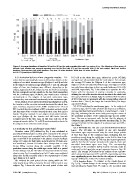
Figure 5. Average durations of inactive, TA-active, MG-active and co-active intervals. See caption of Fig. 4 for definitions of four groups of
intervals. Each duration was averaged separately over the first five trials (F5) and the successful trials (S) for each subject. Black bars: Inactive
durations. Dark gray bars: MG-active durations. Gray bars: TA-active durations. White bars: Co-active durations.
doi:10.1371/journal.pone.0062956.g005

  3.2.2 Activation-balance of two antagonist muscles. TA-               DC§0.8 to the whole time span, referred to as the DC-Ratio,
active duration was roughly the same as MG-active duration in the       averaged over all successful trials for each subject. For example,
subjects of two-sided intermittent type (Subjects 1 and 9) and also     the average DC-ratios for Subjects 4 of the continuous type,
in the subjects of continuous type (Subjects 4, 7 and 11), although     Subject 2 of the one-sided intermittent type and Subject 9 of the
values of these two durations were different depending on the           two-sided intermittent type in their successful trials were 0.16, 0.46
subject, suggesting that the balancing was achieved by activating       and 0.46, respectively. Fig. 7 also allows us to associate the DC-
the two antagonist muscles equally in the two-sided intermittent        Ratios with the durations of inactive intervals. In particular,
and the continuous types. However, two muscles were activated           defining the ratio of the inactive interval duration to the whole trial
intermittently in the subjects of two-sided intermittent type,          time span, referred to as Inactive-Ratio, we confirmed that the values
whereas they were activated continuously in the continuous type.        of DC-Ratio were in agreement with the corresponding values of
                                                                        Inactive-Ratio. That is, the larger the Inactive-Ratio, the larger
   In two subjects of one-sided intermittent type (Subjects 2 and 5),   was the DC-Ratio.
the inactive and the co-active intervals dominated the whole time
span. However, inspection of the iEMG waveforms for TA and                3.3.1 DC-ratio for the continuous type. In the subjects of
MG revealed that the amplitude of MG activation was quite small,        continuous type, the DC-value showed high frequency oscillations,
and thus most of the co-active intervals in these cases were in fact    and was distributed almost uniformly in a range between -1 and 1
largely TA-active intervals. In one subject of one-sided intermit-      (Fig. 6A), indicating that the vector field governing the motion of
tent type (Subject 8), the inactive and MG-active intervals             the pendulum in subject of the continuous type was not saddle-
occupied most of the time span. In this way, only one of the            type. This was in agreement with the fact that the subjects of
antagonist muscles (either TA or MG) was dominantly activated in        continuous type showed the short inactive durations (Fig. 5). The
the subjects of one-sided intermittent type.                            average DC-Ratio for the subjects of continuous type was 0.22 s.
                                                                        See Table 3.
3.3 Similarity to the saddle-type vector field
   Direction cosine (DC) defined by Eq. 8 was calculated to                3.3.2 DC-Ratio for the one and two-sided intermittent
                                                                        types. The DC-value in subjects of one and two-sided
quantify similarity between a phase plane trajectory of the virtual     intermittent types stayed around unity for much longer periods
pendulum during each successful trial and the theoretical saddle-       of time than that in the continuous type, indicating that the
type vector field of the pendulum in the absence of active feedback     pendulum moved along the saddle-type vector field in those long
torque. DC-values for failed trials, in particular for F5 trials, were  periods of time (Figs. 6B and C). This was also in good agreement
not considered, because DC-values were always close to unity            with the fact that the inactive intervals in the subjects of one and
during falling motions along the unstable manifold. If the              two-sided intermittent types were long. The corresponding
pendulum moves along the saddle-type vector field in a period           trajectories of the pendulum during inactive intervals could be
of time during a trial, the DC-value in that period of time becomes     confirmed by the hyperbolic curved segments shown in Figs. 4E
close to unity. Fig. 6 exemplifies how the DC-value was modulated       and F. The average DC-Ratios for the subjects of one and two-
along time during successful trials in the representative of three      sided intermittent types were 0.47 and 0.42, respectively, and they
types (Subjects 4, 2 and 9).                                            were significantly greater than that for the subjects of continuous
                                                                        type (pv0:001). See Table 3 for related statistics.
   We analyzed the total period of time during which the DC-
value stayed above 0.8 (i.e., between 0.8 and 1.0) for each of nine       3.3.3 Inactive-Ratio. In relation to the results shown in
subjects. Fig. 7 shows the ratio of the total period of time with       Fig. 5, Fig. 7 shows changes in the average durations of inactive
                                                                        intervals (Inactive-Ratio) from F5 trials to the successful trials

PLOS ONE | www.plosone.org                                              10 May 2013 | Volume 8 | Issue 5 | e62956

