


Page 45 - Human Environment Interface (3)
P. 45
Learning Intermittent Strategy

                                     Subject 1 (Two-sided Intermittent)                                      Subject 9 (Two-sided Intermittent)                                        Subject 2 (One-sided Intermittent)

                              1                                                                        1                                                                         1

InactR, DCR, QR, 15Dis, 15SD  0.75                                       InactR, DCR, QR, 15Dis, 15SD  0.75                                        InactR, DCR, QR, 15Dis, 15SD  0.75

                              0.5 0.5 0.5

                              0.25                                                                     0.25                                                                      0.25

                              0                                                                        0                                                                         0
                                    InactR DCR QR 15*Dis 15*SD                                               InactR DCR QR 15*Dis 15*SD                                                InactR DCR QR 15*Dis 15*SD

                                    Subject 3 (One-sided Intermittent)                                         Subject 5 (One-sided Intermittent)                                      Subject 8 (One-sided Intermittent)

                              1                                                                        1                                                                         1

InactR, DCR, QR, 15Dis, 15SD  0.75 0.75 0.75                             InactR, DCR, QR, 15Dis, 15SD                                              InactR, DCR, QR, 15Dis, 15SD

                              0.5 0.5 0.5

                              0.25 0.25 0.25

                              0                                                                        0                                                                         0
                                    InactR DCR QR 15*Dis 15*SD                                               InactR DCR QR 15*Dis 15*SD                                                InactR DCR QR 15*Dis 15*SD

                                             Subject 4 (Continuous)                                                  Subject 7 (Continuous)                                                    Subject 11 (Continuous)

                              1                                                                        1                                                                         1

InactR, DCR, QR, 15Dis, 15SD  0.75 0.75 0.75                             InactR, DCR, QR, 15Dis, 15SD                                              InactR, DCR, QR, 15Dis, 15SD

                              0.5 0.5 0.5

                              0.25 0.25 0.25

                              0                                                                        0                                                                         0
                                    InactR DCR QR 15*Dis 15*SD                                               InactR DCR QR 15*Dis 15*SD                                                InactR DCR QR 15*Dis 15*SD

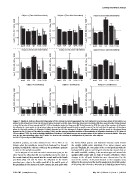
Figure 7. Multiple indices characterizing sway of the virtual inverted pendulum for each subject. In each panel, values of five indices are
plotted as thick black bars. From the left-most index, they represent the ratio of inactive interval to the whole trial time span (Inactive-Ratio) denoted
as InactR, the ratio of time interval with DCw0:8 to the whole single trial time span (DC-Ratio) denoted as DCR, the ratio of the number of off-points
(an off-point is a state point at a time instant when an inactive interval began) located in specific areas of the 2nd and the 4th quadrants of the phase
plane to the total number of off-points (Q-Ratio) denoted as QR, the average of distance between off-points and the v-axis in the phase plane
denoted as Dis (15 times of Dis-value for scaling: 15Dis), and the average standard deviation of h-coordinates of off-points denoted as SD (15 times of
SD for scaling: 15SD). See text for detailed definitions of indices. Thick black bars are for average values of the indices for successful trials. Thin gray
bars are the corresponding values for F5 trials. See text for the meaning of configuration of panels for nine subjects.
doi:10.1371/journal.pone.0062956.g007

backward position, and also switched from TA to MG at an                                                     the forward-tilted posture and backward velocity moved toward
instant when the pendulum moved from backward to forward                                                     the upright saddle point transiently if no active torques were
position, by which the subjects could keep the pendulum’s position                                           present. Similarly, the state point in the second quadrant with the
as close to the upright as possible.                                                                         backward-tilted posture and forward velocity also moved close to
                                                                                                             the stable manifold, resulting in the transient approach toward the
   In the subjects of one and two-sided intermittent types, on the                                           upright saddle point with no help of muscle activations. These
other hand, the off-points did not necessarily tend to be close to                                           changes in the off-point distribution were characterized by the
the v-axis. Instead, they moved into the second and/or the fourth                                            ratio of the number of off-points located in the triangular areas
quadrants (Figs. 8E and F). Since the off-points in the fourth                                               defined in the second and the fourth quadrants to the total number
quadrant were close to the stable manifold of the saddle point of                                            of off-points. We referred to this ratio as Q-Ratio (Quadrant-Ratio).
the pendulum in the absence of active control, the state point with

PLOS ONE | www.plosone.org                                                                                   12 May 2013 | Volume 8 | Issue 5 | e62956

