


Page 44 - Human Environment Interface (3)
P. 44
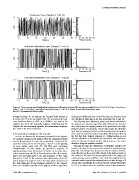
Learning Intermittent Strategy

        DC DC DCA1            Continuous Type (Subject 4 Trial 14)                1

                      0   10 20 30 40 50                                       0.5
                    −1                          Time [s]
                                                                                  0
                       0
                                                                             −0.5

                                                                                −1
                                                                            60 0 10 20 30 40 50

                                                                                        Frequency [%]

                          One-sided Intermittent Type (Subject 2 Trial 27)

B1                                                                          1

      0                                                                     0.5
    −1
                                                                            0
       0
                                                                            −0.5

                                                                                                    −1
                          10 20 30 40 50 60 0 10 20 30 40 50

                            Time [s]                                              Frequency [%]

                          Two-sided Intermittent Type (Subject 9 Trial 29)

                C1                                                          1

                                                                            0.5

                  00

                                                                            −0.5

                  −1 −1
                     0 10 20 30 40 50 60 0 10 20 30 40 50

                            Time [s]                                              Frequency [%]

Figure 6. Time-courses and distribution histograms of Direction Cosine (DC) during successful trials. A. Trial 14 of Subject 4 (continuous
type). B. Trial 27 of Subject 2 (one-sided intermittent type). C. Trial 29 of Subject 9 (two-sided intermittent type).
doi:10.1371/journal.pone.0062956.g006

through learning. In all subjects, the Inactive-Ratio tended to             characterized differently even in the first trials, the off-points were
decrease from F5 to the successful trials. The amounts of decrease          also distributed differently in the first trials (Figs. 8A, B and C).
were significant (either pv0:01 or pv0:001) in one third of the
subjects, but not in the remaining subjects, confirming that the               The off-points were distributed widely and almost uniformly in
subjects did not necessarily optimize the intervention frequency            the subjects of continuous type (Fig. 8A), reflecting the fact that
(see Table 3 for related statistics).                                       they tried to keep the upright position of the pendulum by the high
                                                                            frequency bursts of activations. On the other hand, the off-points
3.4 Inactivation timings of the muscles                                     were located mainly in the first and third quadrants in the subjects
   In order to characterize the strategies adopted by the subjects,         of one and two-sided intermittent types (Figs. 8B and C), reflecting
                                                                            the fact that their delayed response to a falling motion in one
we analyzed changes in the timings when the antagonist muscles              direction (forward or backward) was short-lived and terminated
were both inactivated. To this end, we specified a location of the          when the state point started another falling motion in the other
pendulum’s state point in the h-v plane, referred to as the off-point,      direction along the unstable manifold.
at every instant when both TA and MG were inactivated
simultaneously. In other words, we specified a sequence of                     Through learning, the distribution of off-points changed and
switching-timings from MG-active, TA-active or co-active inter-             tended to be close to the v-axis in the subjects of continuous type
vals to inactive intervals. Fig. 8 shows locations of the off-points for    (Fig. 8D). This change was characterized by the distance between
failed and successful trials in the representatives of thee types           each off-point and the v-axis. We referred to the distance index as
(Subjects 4, 2 and 9). We examined how distributions of the off-            Dis. Values of Dis index for the successful trials in the subjects of
points changed through the motor learning, which characterized              continuous type were small (Fig. 7 and Table 3), implying that the
the state-dependent timing-strategies adopted by the subjects.              activated muscle switched immediately before or after the sign of h
Since the activation patterns of the subjects of three types were           altered. More specifically, the activated muscle switched from MG
                                                                            to TA at an instant when the pendulum moved from forward to

PLOS ONE | www.plosone.org                                                11 May 2013 | Volume 8 | Issue 5 | e62956

