


Page 41 - Human Environment Interface (3)
P. 41
Learning Intermittent Strategy

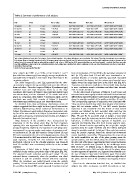
Table 2. Summary of performance of all subjects.

Sub         Total                    Succ. trials                     Max-corr             Time-lag               Mean std. h

S1 two-int  20              F5 Succ  210,13,17,20                     0.6460.02 0.6660.04  20.2260.01–0.2560.01   0.03160.002 0.02560.006
S2 one-int  28              F5 Succ  225,27,28                        0.4760.09 0.57a˚     20.3060.52–0.75a˚      0.03660.001 0.01560.001{
S3 one-int  22              F5 Succ  220,21,22                        0.4160.04 0.2660.12  20.3360.03–0.4460.09   0.03660.002{ 0.01460.002
S4 cont     20              F5 Succ  210,12,18                        0.6160.05 0.5660.11  20.2760.01–0.2460.01   0.04160.002 0.02560.003{
S5 one-int  20              F5 Succ  211,13,18,20                     0.2160.09 0.3460.01  20.7360.12–0.4560.11   0.02760.002 0.01260.001*
S6-         40              F5 Succ  -                                -                    -                      -
S7 cont     20              F5 Succ  29,10,12,13                      0.3360.08 0.4060.08  20.4060.02–0.4360.01   0.03760.002 0.01860.002{
S8 one-int  20              F5 Succ  213,14,17                        0.5260.03 0.5660.06  20.5160.06–0.4460.05   0.03960.002 0.01260.001{
S9 two-int  33              F5 Succ  227,29,33                        0.4560.04 0.6960.08  20.2860.01–0.3260.01{  0.03360.001 0.03660.003
S10-        40              F5 Succ  237                              -                    -                      -
S11 cont    33              F5 Succ  227,28,33                        0.4060.03 0.5660.06  20.3260.01–0.2660.01   0.03960.002 0.02460.004*

2nd column: Number of total trials. 3rd column: Successful trial numbers. 4th column: Maximum cross-correlation. 5th column: Time-lag of maximum cross-correlation.
6th column: Mean of standard deviation (std) of h. Averages were taken over the first five (F5) trials, and also over successful trials. Significance levels of changes in the
indices from F5 to successful trials are indicated by symbols { and à for pv0:001 and pv0:01, respectively. Max-corr. and Time-lag with ? indicate that there was only
one trial exhibiting a clear peak in the correlation function. Each subject was classified into either continuous (cont), one-sided intermittent (one-int), or two-sided
intermittent (two-int) type.
doi:10.1371/journal.pone.0062956.t002

tative subjects (pv0:001 or pv0:01), except Subjects 1 and 9          from an inactivation of TA (or MG) to the successive activation of
(two-sided intermittent type). Interestingly, average amplitudes for  MG (or TA), where both TA and MG were inactivated or co-
successful trials in Subjects 1 and 9 were larger than those in the   activated (inactive or co-active segment), was small. Successful
remaining subjects.                                                   trials inherited this feature, but the motions were bounded more
                                                                      tightly around the origin than those in the failed trial (Fig. 4D).
   The active torques (TTA and TMG) generated by the three            Transition intervals were small also in the successful trials, leading
representative subjects during successful trials were also different  to more continuous muscle activations and short time intervals
from each other. The active torques of Subject 4 (continuous type)    with no muscle activations.
exhibited tonic and high frequency bursts as in the sway
waveforms. MG muscle of Subject 2 (one-sided intermittent type)          On the other hand, trajectories of Subjects 2 and 9 (one and
was almost silent, and the activation of TA muscle was more           two-sided intermittent types) in failed trials could be characterized
phasic in comparison with Subject 4 (continuous type), and its        differently by repeated backward and forward slow falling motions
amplitude was small. Both muscles of Subject 9 (two-sided             along the unstable manifold of the saddle point (Figs. 4B and C).
intermittent type) exhibited sparse and intermittent bursts.          The corresponding segments of trajectories were associated with
                                                                      ‘‘slow natural motions’’during which those subjects of intermittent
   As described here, those preliminary observations across all       types did not activate neither TA nor MG muscle (inactive
subjects suggested that there might be three types of intervention    segments). It was remarkable that this feature of slow natural
strategies; high-frequency, almost continuous interventions as in     motions was inherited by their successful trials, and thus the
Subject 4 (continuous type), medium frequency interventions only      pendulum was not actively actuated for long periods of time
by one of the two muscles as in Subject 2 (one-sided intermittent     (Figs. 4E and F). In successful trials of Subject 2 (one-sided
type), and low frequency, intermittent interventions as in Subject 9  intermittent type), the trajectory circulated almost only in the left-
(two-sided intermittent type).                                        half plane, in which the inactive segments of hyperbolic arcs
                                                                      appeared intermittently (Fig. 4E). Each inactive segment repre-
   Sway dynamics of the pendulum were characterized by                sented a forward motion approaching the origin (the upright
trajectories in the h-v phase plane (Fig. 4). Each trajectory         position) along the stable manifold and then falling backward
spanning 60 s was segmented and classified into four different        along the unstable manifold. In Subject 9 (two-sided intermittent
groups of segments. Segments of a trajectory in each group were       type), the inactive segments formed the upward and downward
accompanied by a group-specific combination of activation and/        convex-hyperbolic curves (Fig. 4F) approaching the origin along
or inactivation of TA and MG muscles: Group-1) both TA and            the stable manifold in one side of the plane, passing across the
MG were inactivated, referred to as the inactive segments, Group-2)   upright position, and then falling along the unstable manifold in
TA was inactivated but MG was activated, referred to as the MG-       the other side of the plane, suggesting that these natural motions in
active segments, Group-3) TA was activated but MG was                 the inactive segments were governed by the saddle-type vector
inactivated, referred to as the TA-active segments, and Group-4)      field of dx=dt~Ax defined in Eq. 3. Moreover, the trajectory
both TA and MG were co-activated, referred to as the co-active        circulated within each of left and right sides of the plane, where
segments.                                                             inactive segments of hyperbolic arcs appeared intermittently as in
                                                                      the case of Subject 2 (one-sided intermittent type). This implied
   Trajectories of failed trials in Subject 4 (continuous type)       that there were two oscillatory dynamics at left and right sides of
exhibited circular motions around the origin of the plane (Fig. 4A).  the plane, and the state of the pendulum was hopping between
The associated muscle activation patterns were simple. TA was         them.
activated almost continuously when the pendulum was tilted
backward to pull the pendulum forward (TA-active segment).               Based on the observations described here, we classified nine
When the pendulum was pulled forward across the upright               subjects into either continuous, one-sided intermittent, or two-
position, TA was inactivated and MG was then activated to pull
the pendulum backward (MG-active segment). Transition interval

PLOS ONE | www.plosone.org                                            8 May 2013 | Volume 8 | Issue 5 | e62956

