


Page 138 - First Aid for the USMLE Step 1 2020, Thirtieth edition [MedicalBooksVN.com]_Neat
P. 138
94 SECTION II BIOCHEmISTRY ``BIOCHEMISTRY—METABOlISM
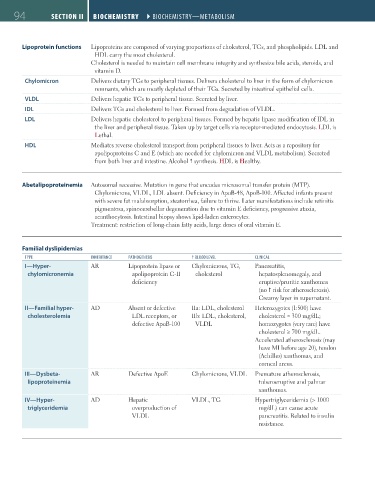
Lipoprotein functions Lipoproteins are composed of varying proportions of cholesterol, TGs, and phospholipids. LDL and
HDL carry the most cholesterol.
Cholesterol is needed to maintain cell membrane integrity and synthesize bile acids, steroids, and
vitamin D.
Chylomicron Delivers dietary TGs to peripheral tissues. Delivers cholesterol to liver in the form of chylomicron
remnants, which are mostly depleted of their TGs. Secreted by intestinal epithelial cells.
VLDL Delivers hepatic TGs to peripheral tissue. Secreted by liver.
IDL Delivers TGs and cholesterol to liver. Formed from degradation of VLDL.
LDL Delivers hepatic cholesterol to peripheral tissues. Formed by hepatic lipase modification of IDL in
the liver and peripheral tissue. Taken up by target cells via receptor-mediated endocytosis. LDL is
Lethal.
HDL Mediates reverse cholesterol transport from peripheral tissues to liver. Acts as a repository for
apolipoproteins C and E (which are needed for chylomicron and VLDL metabolism). Secreted
from both liver and intestine. Alcohol synthesis. HDL is Healthy.
Abetalipoproteinemia Autosomal recessive. Mutation in gene that encodes microsomal transfer protein (MTP).
Chylomicrons, VLDL, LDL absent. Deficiency in ApoB-48, ApoB-100. Affected infants present
with severe fat malabsorption, steatorrhea, failure to thrive. Later manifestations include retinitis
pigmentosa, spinocerebellar degeneration due to vitamin E deficiency, progressive ataxia,
acanthocytosis. Intestinal biopsy shows lipid-laden enterocytes.
Treatment: restriction of long-chain fatty acids, large doses of oral vitamin E.
Familial dyslipidemias
TYPE INHERITANCE PATHOGENESIS BlOOD lEVEl ClINICAl
I—Hyper- AR Lipoprotein lipase or Chylomicrons, TG, Pancreatitis,
chylomicronemia apolipoprotein C-II cholesterol hepatosplenomegaly, and
deficiency eruptive/pruritic xanthomas
(no risk for atherosclerosis).
Creamy layer in supernatant.
II—Familial hyper- AD Absent or defective IIa: LDL, cholesterol Heterozygotes (1:500) have
cholesterolemia LDL receptors, or IIb: LDL, cholesterol, cholesterol ≈ 300 mg/dL;
defective ApoB-100 VLDL homozygotes (very rare) have
cholesterol ≥ 700 mg/dL.
Accelerated atherosclerosis (may
have MI before age 20), tendon
(Achilles) xanthomas, and
corneal arcus.
III—Dysbeta- AR Defective ApoE Chylomicrons, VLDL Premature atherosclerosis,
lipoproteinemia tuberoeruptive and palmar
xanthomas.
IV—Hyper- AD Hepatic VLDL, TG Hypertriglyceridemia (> 1000
triglyceridemia overproduction of mg/dL) can cause acute
VLDL pancreatitis. Related to insulin
resistance.
FAS1_2019_01-Biochem.indd 94 11/7/19 3:16 PM

