


Page 383 - First Aid for the USMLE Step 1 2020, Thirtieth edition [MedicalBooksVN.com]_Neat
P. 383
EndocrinE ` endocrine—PAthology EndocrinE ` endocrine—PAthology SEcTion iii 339
Hypopituitarism Undersecretion of pituitary hormones due to:
Nonsecreting pituitary adenoma, craniopharyngioma
Sheehan syndrome—ischemic infarct of pituitary following postpartum bleeding; pregnancy-
induced pituitary growth susceptibility to hypoperfusion. Usually presents with failure to
lactate, absent menstruation, cold intolerance
Empty sella syndrome—atrophy or compression of pituitary (which lies in the sella turcica),
often idiopathic, common in obese women; associated with idiopathic intracranial hypertension
Pituitary apoplexy—sudden hemorrhage of pituitary gland, often in the presence of an existing
pituitary adenoma. Usually presents with sudden onset severe headache, visual impairment (eg,
bitemporal hemianopia, diplopia due to CN III palsy), and features of hypopituitarism
Brain injury
Radiation
Treatment: hormone replacement therapy (corticosteroids, thyroxine, sex steroids, human growth
hormone)
Acromegaly Excess GH in adults. Typically caused by pituitary adenoma.
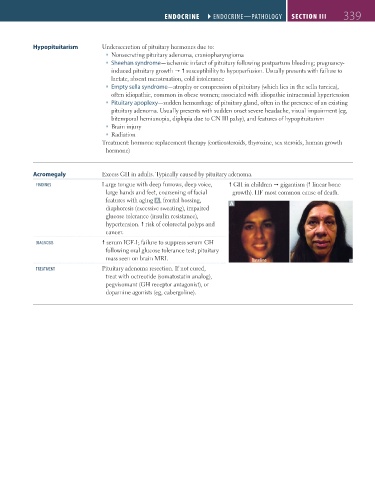
Findings Large tongue with deep furrows, deep voice, GH in children gigantism ( linear bone
large hands and feet, coarsening of facial growth). HF most common cause of death.
features with aging A , frontal bossing, A
diaphoresis (excessive sweating), impaired
glucose tolerance (insulin resistance),
hypertension. risk of colorectal polyps and
cancer.
diAgnosis serum IGF-1; failure to suppress serum GH
following oral glucose tolerance test; pituitary
mass seen on brain MRI. Baseline
treAtment Pituitary adenoma resection. If not cured,
treat with octreotide (somatostatin analog),
pegvisomant (GH receptor antagonist), or
dopamine agonists (eg, cabergoline).
FAS1_2019_08-Endocrine.indd 339 11/7/19 4:30 PM

