


Page 687 - First Aid for the USMLE Step 1 2020, Thirtieth edition [MedicalBooksVN.com]_Neat
P. 687
RepRoductive ` REPRODUCTIVE—PATHOlOgy RepRoductive ` REPRODUCTIVE—PATHOlOgy SectioN iii 643
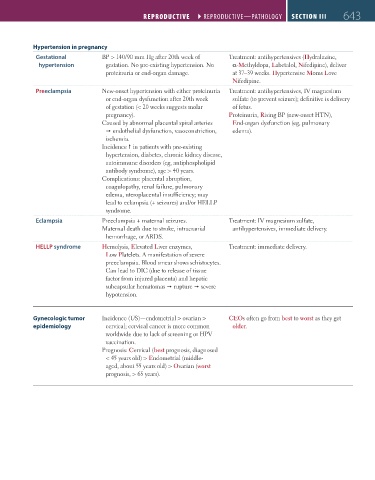
Hypertension in pregnancy
Gestational BP > 140/90 mm Hg after 20th week of Treatment: antihypertensives (Hydralazine,
hypertension gestation. No pre-existing hypertension. No α-Methyldopa, Labetalol, Nifedipine), deliver
proteinuria or end-organ damage. at 37–39 weeks. Hypertensive Moms Love
Nifedipine.
Preeclampsia New-onset hypertension with either proteinuria Treatment: antihypertensives, IV magnesium
or end-organ dysfunction after 20th week sulfate (to prevent seizure); definitive is delivery
of gestation (< 20 weeks suggests molar of fetus.
pregnancy). Proteinuria, Rising BP (new-onset HTN),
Caused by abnormal placental spiral arteries End-organ dysfunction (eg, pulmonary
endothelial dysfunction, vasoconstriction, edema).
ischemia.
Incidence in patients with pre-existing
hypertension, diabetes, chronic kidney disease,
autoimmune disorders (eg, antiphospholipid
antibody syndrome), age > 40 years.
Complications: placental abruption,
coagulopathy, renal failure, pulmonary
edema, uteroplacental insufficiency; may
lead to eclampsia (+ seizures) and/or HELLP
syndrome.
Eclampsia Preeclampsia + maternal seizures. Treatment: IV magnesium sulfate,
Maternal death due to stroke, intracranial antihypertensives, immediate delivery.
hemorrhage, or ARDS.
HELLP syndrome Hemolysis, Elevated Liver enzymes, Treatment: immediate delivery.
Low Platelets. A manifestation of severe
preeclampsia. Blood smear shows schistocytes.
Can lead to DIC (due to release of tissue
factor from injured placenta) and hepatic
subcapsular hematomas rupture severe
hypotension.
Gynecologic tumor Incidence (US)—endometrial > ovarian > CEOs often go from best to worst as they get
epidemiology cervical; cervical cancer is more common older.
worldwide due to lack of screening or HPV
vaccination.
Prognosis: Cervical (best prognosis, diagnosed
< 45 years old) > Endometrial (middle-
aged, about 55 years old) > Ovarian (worst
prognosis, > 65 years).
FAS1_2019_15-Repro.indd 643 11/7/19 5:52 PM

