


Page 201 - APPLIED PROCESS DESIGN FOR CHEMICAL AND PETROCHEMICAL PLANTS, Volume 1, 3rd Edition
P. 201
172                      Applied Process Design for Chemical and Petrochemical  Plants

           The  "single" mechanical seal  is made of a rotating ele-   used  under  various  conditions  111  the  wide  variety  of
         ment fixed to  the shaft  (or shaft sleeve), and a stationary   process fluids.
         element fixed to the  pump casing  [16].                The average unbalanced external seal  is good for pres-
           The "double" seal is for severe sealing problems where   sures of about 30 psig, while the balanced design will han-
         out-leakage  to  the environment cannot be  tolerated and   dle  150  psig.  Special  designs  will  handle  much  higher
         must  be  controlled.  (See  Figures  3-31C  and  3-310.)
         Depending  upon  the  fluid's  characteristics,  the  vent
                                                                                                        Flush
         between  the  double  seals  (Figures  3-31A and  B)  may  be                     Gland     connection
                                                                                           gas�et
         purged with process liquid, or a different liquid or oil, or
         it may  be  connected  to a  seal  pot and vent collection  to          Drive pi,n                  Gland
         prevent leakage  to  the air/  environment.  There  are  tech-   Stuffing-box                       $ring
                                                                    housing  ',,
         niques for testing for leakage of the inner seal  by  measur-      '
         ing the vent space pressure through  the seal  liquid surge         '
         port.  This  should be  essentially atmospheric  (depending
         on  the  vent system  backpressure). This  allows  detection
         before  the leakage  breaks  through the outer seal.
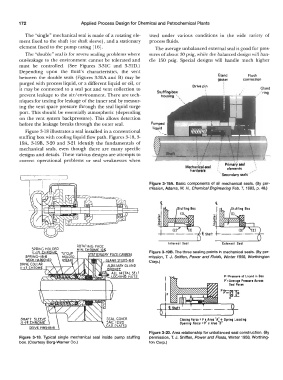
            Figure 3-18 illustrates a seal installed in a conventional
         stuffing box with cooling liquid flow path.  Figures 3-18, 3-
         l9A,  3-198,  3-20  and  3-21  identify  the  fundamentals  of
         mechanical  seals,  even  though  there  are  many  specific
         designs and details. These various designs are attempts to
         correct  operational  problems  or  seal  weaknesses  when
                                                                                   I   I      Primary seal   '.
                                                                                   'I
                                                                              Mechanical-seal   ,   elements   )
                                                                                hardware
                                                                                            -.  Secondary  seals_,�
         e,-�  :  -- . -  =-_]
             I    Ir;;'. , ���                                 Figure  3-19A.  Basic  components  of all  mechanical  seals.  (By  per-
                      I                                        mission, Adams, W.  H., Chemical Engineering Feb.  7,  1983,  p. 48.)


                                                                                          ·         (3)   (2)
                                                                                    't Shafi+-·--·--·-·
                                                                       Internal  Seal        Exltrnol  Seol
              SPRING  HOLDER
              U:H  HR  M                                       Figure 3-198. The three sealing points in mechanical  seals. (By per-
            SPRING-18·8                                        mission,  T.  J.  Sniffen,  Power and Fluids,  Winter 1958,  Worthington
            WORK  HAR  ENED                                    Corp.)
         DRIVE  COLI AR
         L'.:.!.�  CHROME.
                                                                                              P:  Prtnurt of Liquid  in  Boa
                                                                                              p':Avtrage Pressure Across
                                                                                                Stol  Facts


                                                                           Closi�g  Foret:  P  1 1 Arta  "A::  t, Spring  Loading
                                                                           Opening  Force : P  I Arto  B
                                                               Figure 3-20. Area relationship for unbalanced seal  construction. (By
         Figure  3-18.  Typical  single  mechanical  seal  inside  pump  stuffing   permission, T.  J.  Sniffen, Power and Fluids,  Winter 1958,  Worthing-
         box.  (Courtesy Borg-Warner Co.)                      ton Corp.)

