


Page 204 - APPLIED PROCESS DESIGN FOR CHEMICAL AND PETROCHEMICAL PLANTS, Volume 1, 3rd Edition
P. 204
Pumping of Liquids                                       175


                                2  N. P. T. 's  for Quenching  Inlet ond Outlet   of a manufacturer's  performance curve  to fit the control
                                                                requirements of the system. If  the curve is too steep, select
                                                                an impeller of necessary basic characteristics to  move  the
                                                                curve in  the proper direction,  providing  the manufactur-
                                                                er has  an  impeller pattern  to  fit  that pump  casing,  and
                                                                with the improved physical dimensions.  This may require
                                                                changing  the  make  of  pump  to  obtain  the  necessary
                                                                range and characteristic.
                                                                  For conditions of (1)  high  suction  side  (or inlet)  fric-
                                                                tion loss,  from suction piping calculations or (2)  low avail-
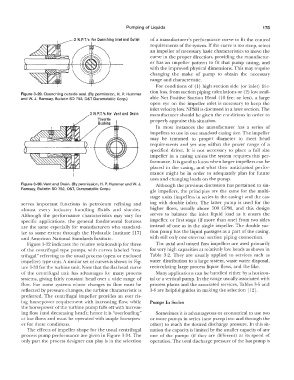
          Figure 3-29.  Quenching outside seal.  (By pennission,  H.  P.  Hummer
          and W.  J.  Ramsey,  Bulletin SD 752,  O&T Durametallic Corp.)   able Net Positive  Suction  Head  (l  O  feet or less), a  large
                                                                open  eye  on  the  impeller  inlet is  necessary  to  keep  the
                                                                inlet velocity low.  NPSH is discussed in a later section. The
                                       2  N.P.T. s  for Vent and  Drain   manufacturer should be  given  the conditions in order to
                                            1
                                          Throttle              properly appraise this situation.
                                              --------            In  most  instances  the  manufacturer  has  a  series  of
                                          Bushing
                                                                impellers  to use in one standard casing size.  The impeller
                                                                may  be  trimmed  to  proper  diameter  to  meet  head
                                                                requirements  and  yet  stay  within  the  power  range  of a
                                                                specified  driver.  It  is  not  necessary  to  place  a  full  size
                                                                impeller in  a  casing  unless  the  system  requires  this  per-
                                                                formance. It is good to know when larger impellers can be
                                                                placed  in  the  casing,  and.  what  their anticipated  perfor-
                                                                mance  might  be  in  order  to  adequately  plan  for  future
                                                                uses and changing loads on the pump.
          Figure 3-30. Vent and Drain. (By permission,  H.  P.  Hummer and W.  J.   Although the previous discussion has pertained  to sin-
          Ramsey,  Bulletin SD 752,  O&  T,  Durametallic Corp.)
                                                                gle  impellers,  the  principles  are  the  same  for the  multi-
                                                                stage units  (impellers  in series in  the casing)  and the cas-
          serves  important  functions  in  petroleum  refining  and   ing  with  double  inlets.  The  latter  pump  is  used  for  the
          almost  every  industry  handling  fluids  and  slurries.   higher  flows,  usually  above  500  GPM,  and  this  design
          Although  the  performance  characteristics  may  vary  for   serves  to  balance  the  inlet  liquid  load  as  it  enters  the
          specific  applications,  the  general  fundamental  features   impeller,  or first stage  (if more than  one)  from two  sides
          are  the same  especially for manufacturers who standard-   instead of one  as  in  the  single impeller.  The  double  suc-
          ize  to  some  extent through  the  Hydraulic  Institute  [17]   tion pump has  the liquid passages  as a  part of the casing,
          and American National  Standards Institute.           with still only one external suction  piping connection.
             Figure  3-32 indicates the relative relationship for three   The axial  and mixed flow  impellers  are used primarily
          of the centrifugal  type  pumps,  with  curves  labeled  "cen-   for very high capacities at relatively low heads as shown in
          trifugal" referring to  the usual  process  (open or enclosed   Table  3-2.  They  are  usually  applied  to  services  such  as
          impeller)  type unit.  A similar set of curves is shown in Fig-   water distribution to a  large system,  waste  water disposal,
          ure 3-33 for the turbine unit.  Note that the flat.  head curve   recirculating large process liquor flows,  and the like.
          of the  centrifugal  unit  has  advantages  for  many  process   Many applications can  be handled either by a horizon-
          systems,  giving fairly  constant head  over a  wide  range  of   tal or a vertical pump.  In the range usually associated with
          flow.  For  some  systems  where  changes  in  flow  must  be   process plants and the associated services,  Tables 3-5  and
          reflected by pressure changes,  the turbine characteristic is   3-6 are  helpful guides in making the selection  [I 2].
          preferred.  The  centrifugal  impeller provides  an  ever ris-
          ing  horsepower requirement  with  increasing  flow,  while   Pumps In Series
          the horsepower of the turbine pump falls off with increas-
          ing flow  (and decreasing head); hence it is  "overloading"   Sometimes  it is  advantageous  or economical  to use two
          at low flows  and  must be  operated with  ample  horsepow-   or more pumps in series  (one pump into and through the
          er for these conditions.                              other)  to reach the desired  discharge  pressure.  In  this sit-
            The  effects of impeller shape for the usual centrifugal   uation the capacity is limited by the smaller capacity of any
          process pump performance are given  in Figure 3-34.  The   one  of the  pumps  (if they  are  different)  at its  speed  of
          only part the process designer can play  is in  the selection   operation. The total discharge pressure of the last pump is

