


Page 286 - APPLIED PROCESS DESIGN FOR CHEMICAL AND PETROCHEMICAL PLANTS, Volume 1, 3rd Edition
P. 286
256                       Applied Process Design for Chemical  and Petrochemical  Plants


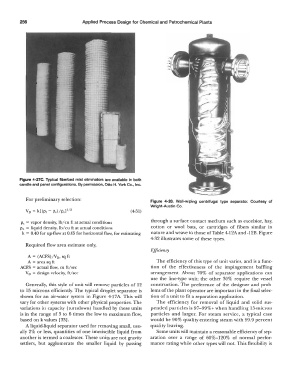
         Figure 4-27C. Typical  fiberbed  mist eliminators are available in  both
         candle and panel configurations. By permission, Otto H. York Co., Inc.

            For preliminary selection:                         Figure  4-28.  Wall-wiping  centrifugal  type  separator.  Courtesy  of
                                                               Wright-Austin Co.
            Vo= k[(P1  - p,)/Pvl112                    ( 4-51)

          p, = vapor density,  lb/cu ft at actual conditions   through a surface contact medium such as excelsior,  hay,
         PL  =  liquid density,  lb/cu ft at actual conditions   cotton  or  wool  bats,  or  cartridges  of  fibers  similar  in
          k  = 0.40 for up-flow at 0.65 for horizontal flow,  for estimating   nature and weave to those of  Table 4-12A and -12B. Figure
                                                               4-32 illustrates some of these  types.
            Required flow area estimate only,
                                                               Efficiency
            A  =  (ACFS)/V0,  sq ft
            A= area sq ft                                        The efficiency of this  type of unit varies,  and is a func-
         ACFS  =  actual  flow,  cu ft/  sec                   tion  of  the  effectiveness  of  the  impingement  baffling
            V 0  =  design velocity,  ft/sec                   arrangement.  About  70%  of separator  applications  can
                                                               use  the  line-type  unit;  the  other  30%  require  the vessel
            Generally,  this style of unit will  remove  particles of 12   construction.  The  preference  of the  designer and  prob-
         to  15 microns efficiently.  The  typical  droplet separator is   lems of  the plant operator are important in the final selec-
         shown  for an  air-water system  in  Figure  4-17  A.  This  will   tion of a unit to fit a separation application.
         vary for other systems with other physical properties.  The   The  efficiency  for  removal  of liquid  and  solid  sus-
         variations in  capacity  (turndown)  handled  by  these units   pended particles is 97-99%+ when handling 15-micron
         is in  the range  of 3  to  6  times  the  low  to  maximum flow,   particles  and  larger.  For  steam  service,  a  typical  case
         based on k values  (33].                              would be 90% quality entering steam with 99.9 percent
            A liquid-liquid separator used for removing small, usu-   quality  leaving.
         ally  2%  or less,  quantities  of one  immiscible  liquid  from   Some units will maintain a reasonable efficiency of sep-
         another is termed a coalescer.  These units are not gravity   aration  over  a  range  of  60%-120%  of  normal  perfor-
         settlers,  but  agglomerate  the  smaller  liquid  by  passing   mance rating while other types will  not.  This flexibility  is

