


Page 284 - APPLIED PROCESS DESIGN FOR CHEMICAL AND PETROCHEMICAL PLANTS, Volume 1, 3rd Edition
P. 284
254                       Applied Process Design for Chemical and Petrochemical  Plants
                                                  ..                        Wire  �tro.in!';:i11nt !�esh  S!lecif1cat1on9

            Job No.--------
                                                  p  ...   ,  ...   ,,   A.  A;,pl1Mtion  Service
                                                             ••••
                                                  u,.itPriu
            e./MNo.      _                                             1.  Source  or :;:ntrain'Dent:
                              DRUII OR TANK SP!CIFICA TIOMS   N•.  U•lt1   J
                                                  .• _ ... _  o-  .J   2.  Oncratlnf'  Conditions:  Give  (1)  Jior-�al  (2)  lfaxirnum
            Su'f'lo:•_p/�!._�o.,,_::-  -,..,d  ...f.,� .... -..a.;,a-
            SIH  30"  o. o.  ,c 10'-o" ilen• L,;,e   T)'P•----------------1               (3)  I-'.inia,u,-,,,  where  possible
                                                                         Te·.-.perature  ---------
                                                                          Pr0ssure
                                                                         Vapor Ph,1,se
                                                                            Flow  R:lte  --------
                                                                            *Velocity
                                                                            Density   -------- at operating  conditions
                                                                            !�olecular ;ie1!rht
                                                                             Co-npos1t1o!l  or li'ature  of Phase---------
                                                                          Liquid  Entr:,.in�ent Phtlse
                                   DISIGN  DATA
            Op•rath11  Po, •• ,_   ;5   PSl..f...__   O,•Ntl11e r....   - //0   "P.   ',uant1ty  (if kno,m):  -------------
            D•1l1n Prn1we   lop   PSI  L_   0.1t1,. T--,,   -139   "F.      Density:
            Cod•  AJ ME   s,...  YfJ   Letliel  c.,11,. �""'�--- o-11ty el C...Mflot1  _..J.L..Lhlcv.  tt   r � ;f �� ;t;!.n-s � i-o-n- ,---------------
            M111u;al11  Sh.II  Law �•�«•OCt'i!CC  r1t«t/ HM41  t.ew,-�,  Jl«•J   S...en1  C•r'•""  ,j;•/
             Lhllnf;  Metel   No   R11 ....... •rPle,tlc __ = ,.,.•-------------1
                B,1c.k   IV•          Ce91-1_..:;M;,; •      ---r-4          Composition  or t:ature  of Entrainment:  ------
            h11u11al e.,,.,..,1 ... All•-nce  � ,!  .,.   S.11 s..,.,u,.,_,.y�,.s'---- '"'•lwtl•:  Cifr ••  D Nt,  a .. ,  -11o•P
                                    NOZZLl!I              .........          Droplet Si?.es  or distribution  (if known):
                  s.,..1c•   N..  R9<11'tl!.   Slae   ,.,, •• c1 •••   '•cl"'   Solids  Content  (Compoaition  Md  Quantity):   _
                                                        ....
            '"'"'                   ".     I.SO   ,a T,/   A                   Dissolved:
            v ..... o .. ,
                                    6-
                                                 'lTJ
                                           I.So
            Llquitl!  Oi.t          .e"    ,.ro   A!TJ   "'
            0,.1,,                                                              iluspended:
            s.ter., v.1 ....   I    ....   ,so   RTJ    "              3.  Perfor:1iance
                                    u.'
            Ln11I  C-nl
                                                 �7J
                                           JI•
            ....             2      In    .... 0   c.c...-t;,.   "        Allo�a;1e  Tot�l  Se�arator Pressure  Dro�:
            ,,. .. -r.,
                                                        £
                             I
                             ,
            Ge,• c1 •••      :I,    ,i"    JSO   A!TJ   ...
            "'""""'• ..             . ..   ,s.   A!TJ   N                 Allo..,able  ���esh  Pressure  Drop:
            H•oh  J,.c,.,c/ ,,Q/o.;-,,,,
            Low  Lc'll"c/ .&Jl11r-   �·    IS't>   IPTJ   r               Al10C1able  Entrain,nent:
                                    IIIMAHS                               r1i:oah  Thicnless  Recolll!Dended:
            lAl,·,�NJ�"''-  ,',o  be  .S'/ondlordll'l•d.-•  1.•,1,111·cK·N>-,h.,-,.-../ r�  ,.,...,.,  ·�;,/,1  ,L-.1.   B,  Construction  and  Installation
            P,o�··d&  .:,u--11r'J-  o,.,J ,',o-h#fd .. do   .,t;,.  --•,I.   ,.�
            •,      lc"i,,•4        11 .....   , ....                     *Di2,,oeter,  I.DI
            o ...   I       I       I        I       I
            P.O. T•:----------------------------                           Construction  i:·iaterial:
                                                                          *Position  (Horizontal,  Vertical,  Inclined):
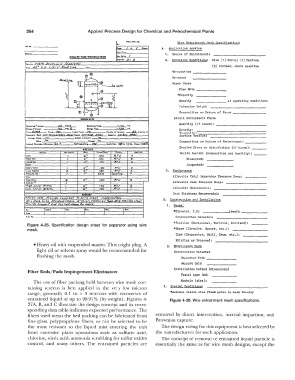
             Figure  4-25.  Specification  design  sheet  for  separator  using  wire
             mesh.                                                        *Shape  (Circul�r,  Square,  etc.):
                                                                           Type  (Ev<1.por.�tor,  Still,  Drum,  etc,):
                                                                           Existing  or Proposed:
               • Heavy oil with  suspended matter.  This  might plug.  A   2.  Entrain:nent J.!esh
                 light oil or solvent spray would be recommended for      Construction  !�ter1al
                 flushing the mesh.
                                                                             Separator Y.esh  ------��
                                                                             &.lpport Grid
                                                                          Installation  ,!ethod  (Di!nensions)
             Fiber Beds/Pads Impingement Eliminators
                                                                             Vessel Open  End:
               The use of fiber packing held between wire  mesh con-         �'.anhole  (size):
             taining  screens  is  best  applied  in  the  very  low  micron   c.  Special Conditions:
             range,  generally  0.1  to  >  3  microns  with  recoveries  of   *Assumes  vessel size  �ixed  prior  to  mesh  1nau1ry
             entrained  liquid of up  to  99.97%  (by weight). Figures  4-   Figure 4-26.  Wire entrainment mesh  specifications.
             27A,  B,  and C  illustrate the design concept and its  corre-
             sponding data table indicates expected performance. The
             fibers used mean  the bed packing can be fabricated from   removed  by  direct  interception,  inertial  impaction,  and
             fine glass,  polypropylene fibers,  or can  be  selected  to  be   Brownian capture.
             the  most  resistant  to  the  liquid  mist  entering  the  unit   The design rating for this equipment is best selected by
             from  corrosive  plant  operations  such  as  sulfuric  acid,   the manufacturers  for each application.
             chlorine, nitric acid, ammonia scrubbing for sulfur oxides   The concept of removal of entrained liquid particle is
             control,  and  many  others.  The  entrained  particles  are   essentially  the same as for wire  mesh  designs,  except the

