


Page 344 - APPLIED PROCESS DESIGN FOR CHEMICAL AND PETROCHEMICAL PLANTS, Volume 1, 3rd Edition
P. 344
312                       Applied Process Design for Chemical  and Petrochemical  Plants

             (Figure  5-23 continued [rom previous  page)         (text  continued [rom page  309)
                                   Vertical  Tu be                cleaning,  and  emptying  the  reactor  (see  Figures  5-25A
                                     Baffles
                                                                  and B).
                                                                     In batch operations, mixing takes place until a desired
                                                                  composition  or  concentration  of chemical  products  or
                                                                  solids/crystals is achieved.  For continuous operation,  the
                                                                  feed,  intermediate,  and  exit streams  will  not necessarily
                                                                  be  of the  same  composition,  but the  objective  is  for the
                                                                  end/exit stream to be of constant composition as a result
                                   Helical  Coil
                                                                  of the blending,  mixing,  chemical  reaction, solids suspen-
                                                                  sion,  gas  dispension,  or other operations of the process.
                                                                   "Perfect"  mixing is  rarely  totally achieved,  but represents
                                                                   the instantaneous conversion of the feed lo  the final  bulk
                                                                  and exit composition  (see Figure 5-26).
                                                                     When  conducting  pilot  plant  testing  to  develop  a
                       0
                                                                  process involving mixing,  which later may  be  used in the
                                                                   design  of a  large  scale  plant,  it is wise  to  discuss  the  test-
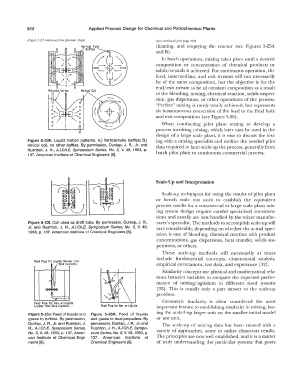
             Figure  5-23H.  Liquid  motion  patterns.  A.)  Vertical-tube  baffles;  B.)   ing with a  mixing specialist and outline the needed pilot
             Helical  coil,  no  other baffles.  By  permission,  Dunlap,  J.  R.,  Jr.  and   data required to later scale-up the process, generally from
             Rushton,  J.  H.,  Al-ChE Symposium  Series,  No.  5,  V.  49,  1953,  p.   batch pilot plant to continuous commercial process.
             137.  American  Institute of Chemical  Engineers [6].


                                                                   Scale-Up and Interpretation

                                                                     Scale-up techniques for using the results of pilot plant
                                                                   or  bench  scale  test  work  lo  establish  the  equivalent
                                                                   process results for a  commercial or large scale plant mix-
                                                                   ing  system  design  require  careful  specialized  considera-
                                                                   tions and usually are best handled by the mixer manufac-
             Figure 5-231.  Coil  used  as  draft tube.  By permission,  Dunlap,  J.  R.,   turer's specialist.  The methods to accomplish scale-up will
             Jr.  and  Rushton,  J.  H.,  A./.Ch.E.  Symposium  Series,  No.  5,  V.  49,   vary considerably,  depending on whether the actual  oper-
             1953,  p.  137.  American  Institute of Chemical  Engineers [6].
                                                                   ation is one of blending,  chemical  reaction with  product
                                                                   concentrations,  gas  dispersions,  heal  transfer,  solids  sus-
                                                                   pensions, or others.
                                                                     These  scale-up  methods  will  necessarily  at  times
                                                                   include  fundamental  concepts,  dimensional  analysis,
               feed  Pipe  for Liquids  Heavier  rnan
                          Tank Contents                            empirical  correlations,  test data, and experience  [32].
                                                                     Similarity concepts use physical and mathematical rela-
                                                                   tions between variables  to  compare  the  expected perfor-
                                                                   mance  of  mixing/agitation  in  different  sized  systems
                                                                   [33].  This  is  usually  only  a  part  answer  to  the  scale-up
                                                                   problem.
                                                                     Geometric  similarity  is  often  considered  the  most
                Feed  Pipe  for  Gas or Liquids
                Lighter  than  Tank  Contents   feed  Pipe  for Gas  or Li�uids   important feature to establishing similarity in mixing,  bas-
             Figure 5-23J. Feed of liquids and   Figure  5-23K.  Feed  of  liquids   ing the scaled-up larger unit on the smaller initial  model
             gases to turbine.  By permission,   and gases to dual propellers.  By   or test unit.
             Dunlap, J. R., Jr.  and Rushton, J.   permission, Dunlap, J.  R., Jr.  and   The  scale-up  of mixing  data  has  been  treated with  a
             H.,  A.I.Ch.E.  Symposium  Series,   Rushton, J. H., A.I.Ch.E.  Sympo-   variety  of approaches,  some  to  rather disastrous  results.
             No.  5,  V.  49,  1953,  p.  137. Ameri-   sium Series,  No. 5,  V.  49, 1953, p.
             can  Institute  of  Chemical  Engi-   137.  American   Institute   of   The principles are now well established, and it is a matter
             neers [6].                Chemical  Engineers [6].    of truly  understanding  the  particular  systems  that poses

