


Page 339 - APPLIED PROCESS DESIGN FOR CHEMICAL AND PETROCHEMICAL PLANTS, Volume 1, 3rd Edition
P. 339
Mixing of Liquids                                       307

       larly  true  in  continuous  chemical  processes  where  the
       general  nature of the fluid  remains  constant but the vis-
       cosity,  density or solid particle content may change as the
       plant progress  from  'just  erected'  to  steady  production
       and  even  on  to  new  and  different products.  This  transi-
       tion  may  take  from  a  few  months  to  several  years  and
       should be economically evaluated. The gear mechanism is
       not  a  place  to  reduce  costs  for  this  equipment,  since
       improper application can create costly maintenance.

          Usual  practice,  particularly  for  good  estimating  is  to
       assume  that  the  gear  drive  requires  5%  of the  impeller
       horsepower  and  that  system  "surging  or  variations"
       require  a  minimum  of 10%  of this  impeller horsepower.
       Thus


          Actual motor hp =  impeller required hp/0.85
                          (minimum)                  (5-41)


       When the actual  maximum gear box horsepower is known
       from  the  manufacturer,  it should be  used as  long as  it is
       equal  to or greater than  the 5%  allowance  noted above.
       The  impeller/fluid  horsepower  allowable  variation
       should still  be  10%  or greater.  For example,  if the calcu-
       lated  required  motor drive  (or  turbine  drive)  hp  =  23,
        (i.e., 19.55/0.85), the next standard motor is 25 hp, so use
        this, never less than the 23 indicated above because 23 hp
       is non-standard, and no such motor hp exists.
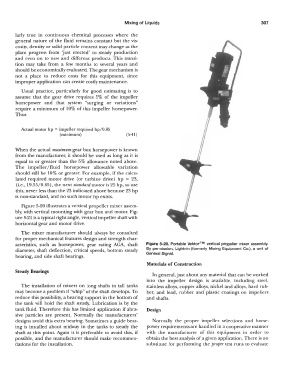
          Figure 5-20 illustrates a vertical  propeller mixer assem-
       bly,  with vertical  mounting with gear box and motor.  Fig-
       ure 5-21  is a typical right angle, vertical impeller shaft with
       horizontal gear and motor drive.

          The  mixer  manufacturer  should  always  be  consulted
       for proper mechanical features design and strength char-
       acteristics,  such  as  horsepower,  gear  rating  AGA,  shaft   Figure  5-20.  Portable VektorCTM)  vertical  propeller mixer assembly.
       diameter,  shaft  deflection,  critical  speeds,  bottom  steady   By  permission,  Lightnin  (formerly  Mixing  Equipment Co.),  a  unit of
       bearing,  and side shaft bearings.                    General Signal.
                                                             Materials of Construction
       Steady Bearings
                                                               In general,just about any material  that can be worked
                                                             into  the  impeller  design  is  available,  including  steel,
          The  installation  of mixers  on  long shafts  in  tall  tanks   stainless alloys, copper alloys, nickel and alloys, hard rub-
       may become a problem if "whip" of the shaft develops.  To   ber,  and  lead,  rubber and  plastic  coatings  on  impellers
       reduce this possibility,  a bearing support in the bottom of   and shafts.
       the  tank will  hold  the  shaft  steady.  Lubrication  is  by  the
       tank fluid. Therefore this  has limited application  if abra-   Design
       sive  particles  are  present.  Normally  the  manufacturers'
       designs avoid this extra bearing.  Sometimes a guide bear-   Normally  the  proper  impeller  selections  and  horse-
       ing  is  installed  about midway  in  the  tanks  to  steady  the   power requirements are handled in a cooperative manner
       shaft  at  this  point.  Again  it is  preferable  to  avoid  this,  if   with  the  manufacturer  of  this  equipment  in  order  to
       possible, and the  manufacturer should make recommen-   obtain the best analysis of  a given application. There is no
       dations for the installation.                         substitute  for performing  the proper test runs  to  evaluate

