


Page 356 - APPLIED PROCESS DESIGN FOR CHEMICAL AND PETROCHEMICAL PLANTS, Volume 1, 3rd Edition
P. 356
324                       Applied Process Design for Chemical  and Petrochemical  Plants

                 10                                                  For  side  entering  horizontal  mixers  not  limited  to
                                                       -          blending  operations,  there  are  some  differences  in  rec-
                                                  __.......-      ommendations  concerning  the  physical  location  of the
                                          SJI ��   0.4            impeller:
                               ........ -   ,.,........   B

                           � ...........          .I                 1. The  impeller  should  be  located  �  to  rn  times  the
                     vv                                                impeller diameter away from the tank wall in plan.
                   n  fl  u                   c
                                                                     2. The  impeller centerline should  be  �  to  20 off the
                                                                       tank bottom.
                  I                                         10
                  0.1                 1.0
                                      PO Hr                          3. The  impeller shaft should make a  plan  angle of 8°
                                                                       to  30°  (10°  optimum)  to  the left of a  centerline of
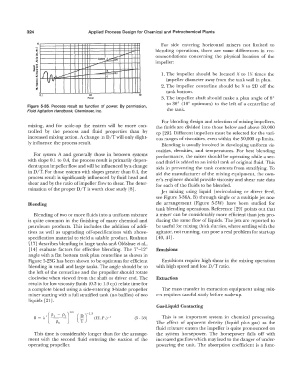
             Figure  5-35.  Process  result  as  function  of  power.  By  permission,
            Fluid Agitation Handbook,  Chemineer,  Inc.                the tank.
                                                                     For blending design and selection of mixing impellers,
             m1xmg,  and  for  scale-up  the  system  will  be  more  con-   the fluids are divided  into  those below and above  50,000
             trolled  by  the  process  and  fluid  properties  than  by   cp  [29). Different impellers must be selected for the vari-
             increased mixing action. A change in D/T will only slight-   ous ranges of viscosities, even within the 50,000 cp limits.
             ly influence the process result.                        Blending is usually involved in developing uniform vis-
                                                                  cosities,  densities,  and  temperatures.  For  best  blending
               For  system  A  and  generally  those  in  between  systems   performance,  the mixer should be operating while a sec-
             with slope 0.1  to 0.4,  the process  result is primarily depen-   ond fluid is added to an initial tank of  original fluid. This
             dent upon impeller flow and will be influenced by a change   aids  in  preventing  the  tank contents from  stratifying.  To
             in D/T.  For those systems with slopes greater than 0.4,  the   aid the manufacturer of the mixing equipment,  the own-
             process  result is  significantly  influenced  by fluid head and   er's engineer should provide viscosity and shear rate data
             shear and by the ratio of impeller flow to shear.  The deter-   for each of the fluids to be blended.
             mination of the proper D/T is worth close study  [8].
                                                                     Jet mixing  using  liquid  (recirculating  or  direct  feed,
                                                                   see Figure 5-36A, B)  through single or a multiple jet noz-
             Blending                                              zle  arrangement  (Figure  5-5W)  have  been  studied  for
                                                                   tank blending operations.  Reference  [29)  points  out that
               Blending of two or more fluids into a uniform mixture   a mixer can  be  considerably more efficient than jets pro-
             is  quite  common  in  the finishing  of many  chemical  and   ducing the same flow of liquids.  The jets  are reported  to
             petroleum  products.  This  includes  the addition  of addi-   be useful for mixing thick slurries, where settling with the
             tives  as  well  as  upgrading  off-specifications  with  above-   agitator,  not running,  can pose a real problem for start-up
             specification  material to yield a  salable  product.  Rushton   [40, 41].
             [17)  describes blending in large tanks and Oldshue et al.,
             [14]  evaluate  factors  for  effective  blending.  The  7°-12°   Emulsions
             angle with a flat bottom  tank plan centerline as shown in
             Figure 5-23G has been shown to be optimum for efficient   Emulsions require high shear in the mixing operation
             blending in small and large tanks. The angle should be to   with high speed and low D/T ratio.
             the left of the centerline and the propeller should rotate
             clockwise when viewed from the shaft or driver end.  The   Extraction
             results for low viscosity fluids (0.3 to 1.0 cp)  relate time for
             a complete blend using a  side-entering 3-blade propeller   The mass  transfer in extraction equipment using mix-
             mixer starting with a full stratified tank (no baffles)  of two   ers requires careful study before scale-up.
             liquids  [21].
                                                                   Gas-Liquid Contacting

                                                          (5 -  68)   This  is  an  important  system  in  chemical  processing.
                                                                   The  effect  of apparent density  (liquid  plus  gas)  as  the
                                                                   fluid mixture enters  the impeller is quite pronounced on
               This  time is  considerably longer than for the arrange-   the  system  horsepower.  The  horsepower  falls  off  with
             ment with  the  second  fluid  entering  the  suction  of the   increased gas flow which may lead to the danger ofunder-
             operating propeller.                                  powering  the  unit.  The  absorption  coefficient  is  a  func-

