


Page 357 - APPLIED PROCESS DESIGN FOR CHEMICAL AND PETROCHEMICAL PLANTS, Volume 1, 3rd Edition
P. 357
Mixing of Liquids                                       325

                                                              PRESSURE CONNECTION           PRESSURE CONNECTION
                                                DISCHARGE.
                                                Can  be
                                                thrHded
                                                or  pl1in.
                                                                                                         REMOVABLE
                                                                                                         NOZZLE
                                                   SUCTION
                                                   CONNECTION                                            REMOVABLE
                                                                                                         THROAT
                                                                                     SUCTION             PIECE
                                                                           REMOVABLE   CONNECTION
                                                                           NOZZLE


                              SUCTION              SUCTIOfl
                              LIQUID               LIQUID
                              FLOW                 FLOW


                                    PRESSURE  CONNECTION
                                                                 DISCHARGE                      DISCHARGE
                                                                 CONNECTION                     CONNECTION
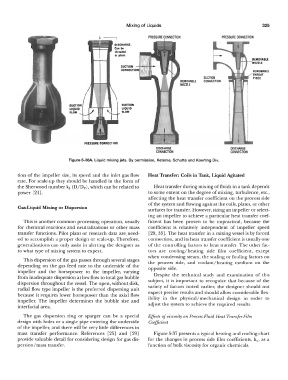
                             Figure 5-36A.  Liquid mixing jets.  By permission,  Ketema,  Schutte and  Koerting Div.


        tion of the  impeller size,  its  speed  and  the  inlet gas  flow   Heat Transfer:  Coils in Tank, Liquid Agitated
        rate.  For scale-up they should be handled in  the form of
        the Sherwood number k 1  (D/Dv), which can be related to   Heat transfer during mixing of fluids in a tank depends
        power [21].                                           to some extent on the degree of mixing,  turbulence,  etc.,
                                                              affecting the heat transfer coefficient 011  the process side
                                                              of the system and flowing against the coils, plates, or other
        Gas-Liquid Mixing or Dispersion                       surfaces for transfer.  However,  sizing an impeller or select-
                                                              ing an  impeller to achieve a particular heat transfer coef-
           This is another common  processing operation, usually   ficient has  been  proven  to  be  impractical,  because  the
        for chemical  reactions and neutralizations or other mass   coefficient  is  relatively  independent  of  impeller  speed
        transfer functions.  Pilot plant or research data are.need-   [29,  35]. The heat transfer in a  mixing vessel  is by forced
        ed to  accomplish a proper design  or scale-up.  Therefore,   connection, and its heat transfer coefficient is usually one
        generalizations can  only  assist in  alerting  the designer as   of the controlling factors  to  heat transfer.  The other fac-
        to what type of mixing system to expect.              tors  are  cooling/heating  side  film  coefficient,  except
                                                              when condensing steam, the scaling or fouling factors on
           This dispersion of the gas passes through several stages   the  process  side,  and  coolant/heating  medium  on  the
        depending on  the gas  feed  rate  to  the  underside of the   opposite side.
        impeller  and  the  horsepower  to  the  impeller,  varying
        from inadequate dispersion at low flow to total gas bubble   Despite  the  technical  study  and  examination  of this
        dispersion throughout the vessel. The open, without disk,   subject,  it is  important  to  recognize  that because  of the
        radial  flow  type  impeller is  the  preferred dispersing  unit   variety  of factors  noted  earlier,  the  designer  should  not
        because  it requires  lower horsepower than  the axial  flow   expect precise results and should allow considerable flex-
        impeller.  The  impeller  determines  the  bubble  size  and   ibility  in  the  physical/mechanical  design  in  order  to
        interfacial area.                                     adjust the system to achieve  the required results.
           The  gas  dispersion  ring  or  sparger  can  be  a  special   Effects of  viscosity  on Process Fluid Heat Transfer Film
        design with holes or a single pipe entering the underside   Coefficient
        of the impeller,  and there will be very little differences in
        mass  transfer  performance.  References  [25]  and  [29]   Figure 5-37 presents a typical heating and cooling chart
        provide valuable detail for considering design for gas dis-   for the  changes  in  process  side  film  coefficients,  h 0,   as  a
        persion/mass  transfer.                               function of bulk viscosity for organic  chemicals.

