


Page 555 - APPLIED PROCESS DESIGN FOR CHEMICAL AND PETROCHEMICAL PLANTS, Volume 1, 3rd Edition
P. 555
Applied Process Design                                     521

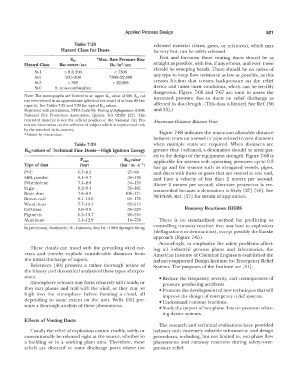
                                Table 7-28                       released  material  (dusts,  gases,  or mixtures), which  may
                          Hazard Class for Dusts                 be very hot,  can be safely released.

                              Ks 1       *Max. Rate Pressure Rise   First  and  foremost  these  venting  ducts  should  be  as
           Hazard Class   Bar meter/sec        lbr/in /sec       straight as possible, with few,  if  any elbows, and even these
                                                    2
                      ��------------------�                      should be  sweeping bends.  There  should  be no valves of
               St-I         >  0 �  200          < 7300
               St-2         201-300            7300-22,000       any  type to keep flow resistance as  low as  possible,  as  this
               St-3          >  300             > 22,000         creates  friction  that  creates  backpressure  on  the  relief
               St-0     0,  non-combustible                      device and raises burst conditions,  which  can  be  terribly
                                                                 dangerous.  Figure  7-66  and  7-67  are  used  to  assess  the
           Note:  The nomographs are limited  to an upper K,t value of 600.  Kst val-   increased  pressure  due  to  ducts  on  relief  discharge  as
           ues determined in an approximate spherical  test vessel of at least 20 liter
           capacity.  See Tables 7-29 and 7-30 for typical  Ksr values.   affected by duct length.  (This data is limited. See Ref.  [56
           Reprinted with permission, NFPA Code 68,  Venting of Deflagrations ( 1988)   and 53] .)
           National  Fire  Protection  Association,  Quincy,  NI.A  02269  [27].  This
           reprinted material  is  not the  official  position  of the  National  Fire  Pro-   Maximum Distance Between Vents
           tection Association on  the  referenced  subject which  is represented only
           by the standard in its entirety.                         Figure  7-68 indicates the maximum allowable distance
           *Added by  this author.
                                                                 between vents on a vessel or pipe related to vent diameter
                                Table 7-29                       when  multiple  vents  are  required.  When  distances  are
           K 5 cvalues of Technical Fine Dust s  -High Ignition Energy   greater than  indicated,  a  detonation should be  anticipat-
                                                                 ed in the design of the equipment strength.  Figure 7-68 is
                                   pmax              Kscvalue    applicable for systems with operating pressures up  to  0.2
           Type of dust           (bar)            (bar ·  m ·  s -  1)
                                                                 bar  ga  and  for  systems  such  as  elongated  vessels,  pipes,
           PVC                    6.7-8.5             27-98      and ducts with  dusts  or gases  that are vented at one end,
           Milk powder            8.1-9.7             58-130     and  have  a  velocity  of  less  than  2  meters  per  second.
           Polyethylene           7.4-8.8             54-131     Above  2  meters  per  second,  alternate  protection  is  rec-
           Sugar                  8.2-9.4             59-165     ommended  because a detonation  is  likely  [27]  [56]. See
           Resin dust             7.8-8.9             108-174
           Brown coal             8. l-10.0           93-176     NFPA-68,  Ref.  [27]  for details of application.
           Wood dusts             7.7-10.5            83-211
           Cellulose              8.0-9.8             56-229                  Runaway Reactions:  DIERS
           Pigments               G.5-10.7            28-344
           Aluminum               5.4-12.9            16-750       There  is  no  standardized  method  for  predicting  or
                                                                 controlling runaway  reaction  that may lead  to  explosions
           By permission, Bartknecht,  W .. Explosions,  2nd Ed.  ( 1980)  Springer-Verlag.
                                                                 ( deflagrations or detonations), except possibly the Fauske
                                                                 approach  (Figure 7-61).
                                                                   Accordingly,  to  emphasize  the  safety  problems  affect-
              These  clouds  can  travel  with  the  prevailing  wind  cur-   ing  all  industrial  process  plants  and  laboratories,  the
           rents  and  thereby  explode  considerable  distances  from   American Institute of Chemical Engineers established the
           the initial  discharge of vapors.                     industry-supported Design Institute for Emergency Relief
              Reference  [ 40]  presents  a  rather  thorough  review  of   Systems.  The purposes of the Institute are  [51]:
           the history and theoretical analysis of these types of  explo-
           sions.                                                   • Reduce the frequency,  severity,  and consequences  of
              Atmosphere releases may form relatively still clouds,  or   pressure producing accidents
           they  may  plume  and  trail  with  the wind,  or they  may jet   • Promote the development  of new techniques that will
           high  into  the  atmosphere  before  forming  a  cloud,  all   improve  the design of emergency relief systems.
           depending  to  some  extent on  the  unit.  Wells  [53]  pre-   • Understand runaway  reactions.
           sents a  thorough analysis of these phenomena.
                                                                    • Study the impact of  two-phase flow on pressure reliev-
                                                                     ing device systems.
           Effects of Venting Ducts
                                                                   The  research and technical  evaluations  have  provided
              Usua!ly the relief of  explosions cannot readily,  safely,  or   industry  with  extremely valuable information and design
           conventionally be released right at the source, whether in   procedures,  including,  but not limited to,  two-phase flow
           a  building  or in  a  working  plant  area.  Therefore,  these   phenomena  and  runaway  reactions  during  safety I over-
           reliefs  are  directed  to  some  discharge  point where  the   pressure  relief.

