


Page 564 - APPLIED PROCESS DESIGN FOR CHEMICAL AND PETROCHEMICAL PLANTS, Volume 1, 3rd Edition
P. 564
530                       Applied Process Design for Chemical  and Petrochemical  Plants

                            103
                                                                                            ,,  -
                                                                                      * �
                                                                      ,!\   ;.       ""x
                         j                                                   ��  I,
                         1                                              I/     [
                         �                                     Iii   �
                         >-                                 "    �
                         c
                         lll   102
                         en
                         c
                         �                           -             l.w.              LEGEND:
                         u                                                •
                         c
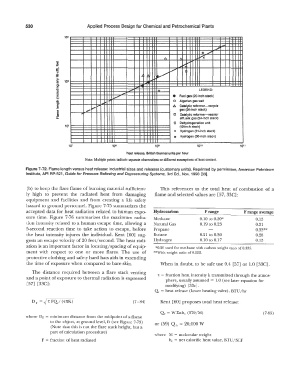
                         ;.                  ..   L/                        Fuel gas (20-lnch stack)
                         5                                                0  Algerian gas well
                         en
                         ..
                         c
                         �         .   ,,.  i,.,,-  ....                  /:,.  Catalytic reformer-recycle
                                                                            gas (24-inch stack)
                         E                                                o  Catalytic reformer-reactor
                         Ill
                         a:                                                 effluent gas (24-inch stack)
                                                                          c  Dehydrogenation unit
                             10 1                                           (12-lnch stack)
                                                                          x  Hydrogen (31-inch stack)
                                                                          *   Hydrogen (30-inch stack)
                              10 7              108               11)8              1010              10 11
                                                      Heat release,  Bfltish thermal units per hour
                                     Note:  Multiple points indicate separate observations or different assumptions of heat content.
            Figure 7-72.  Flame length versus heat release:  industrial sizes and releases (customary units). Reprinted by permission, American  Petroleum
            Institute, API  RP-521, Guide for Pressure Relieving and Depressuring Systems,  3rd  Ed.,  Nov.  1990 [33].
             (b)  to keep the flare flame of burning material sufficient-   This  references  to  the  total  heat of combustion  of a
            ly  high  to  prevent  the  radiated  heat  from  damaging   flame and selected values are  [57, 33C]:
            equipment and facilities  and  from  creating  a  life  safety
            hazard to ground personnel.  Figure 7- 75 summarizes  the
            accepted data  for heat radiation  related to  human  expo-   Hydrocarbon   Frange         F range average
            sure  Lime.  Figure  7-76  summarizes  the  maximum  radia-   Methane    0.10 LO  0.20*         0.15
            tion intensity  related to a human escape  time,  allowing  a   Natural Gas   0.19to0.23        0.21
            5-second  reaction  time  to  take  action  to  escape,  before   Propane                       0.33**
            the  heat  intensity  injures  the  individual.  Kent  [60]  sug-   Butane   0.21  to 0.30      0.28
            gests an escape velocity of 20 feet/second. The heat radi-   Hydrogen    0.10 to 0.17           0.15
            ation is an important factor in locating/spacing of equip-   *0.20 used for methane with carbon weight ratio of 0.333.
            ment  with  respect  to  one  or  more  flares.  The  use  of   **With weight ratio of 0.222.
            protective clothing and safety hard hats aids in extending
            the time of exposure when compared to bare skin.        When in doubt,  to be safe use 0.4  [57]  or 1.0  [33C].
               The  distance  required  between  a  flare  stack  venting   'r  =  fraction heat intensity k transmitted  through  the atmos-
            and a point of exposure to thermal radiation is expressed   phere,  usually assumed  =  1.0  (see later equation for
             [57]  [33C]:                                              modifying)  [33c].
                                                                  Qr= heat release  (lower heating valve), BTU/hr

               D r  =  �    'r FQ./  ( 41tK)             (7- 84)    Kent [60)  proposes total heat release:

                                                                    Q, = W Lnhc  (379/M)                       (7-85)
            where  DF  =  minimum distance from the midpoint of a flame
                      to the object,  at ground level, ft (see Figure 7-73)   or (59)  Q =  20,000 W
                                                                           0
                      (Note that this is not the flare stack height,  but a
                      part of calculation  procedure)
                                                                  where  M  = molecular weight
                   F  =  fraction of heat radiated                      he= net calorific heat value, BTU/SCF

