


Page 353 - Python Data Science Handbook
P. 353
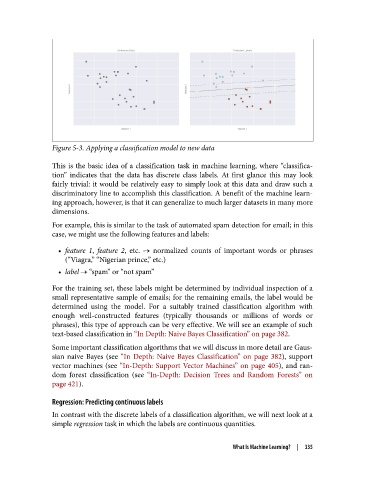
Figure 5-3. Applying a classification model to new data

               This is the basic idea of a classification task in machine learning, where “classifica‐
               tion” indicates that the data has discrete class labels. At first glance this may look
               fairly trivial: it would be relatively easy to simply look at this data and draw such a
               discriminatory line to accomplish this classification. A benefit of the machine learn‐
               ing approach, however, is that it can generalize to much larger datasets in many more
               dimensions.
               For example, this is similar to the task of automated spam detection for email; in this
               case, we might use the following features and labels:
                 • feature 1, feature 2, etc.  normalized counts of important words or phrases
                   (“Viagra,” “Nigerian prince,” etc.)
                 • label   “spam” or “not spam”

               For the training set, these labels might be determined by individual inspection of a
               small representative sample of emails; for the remaining emails, the label would be
               determined using the model. For a suitably trained classification algorithm with
               enough well-constructed features (typically thousands or millions of words or
               phrases), this type of approach can be very effective. We will see an example of such
               text-based classification in “In Depth: Naive Bayes Classification” on page 382.
               Some important classification algorithms that we will discuss in more detail are Gaus‐
               sian naive Bayes (see “In Depth: Naive Bayes Classification” on page 382), support
               vector machines (see “In-Depth: Support Vector Machines” on page 405), and ran‐
               dom forest classification (see “In-Depth: Decision Trees and Random Forests” on
               page 421).

               Regression: Predicting continuous labels
               In contrast with the discrete labels of a classification algorithm, we will next look at a
               simple regression task in which the labels are continuous quantities.


                                                                 What Is Machine Learning?  |  335

