


Page 358 - Python Data Science Handbook
P. 358
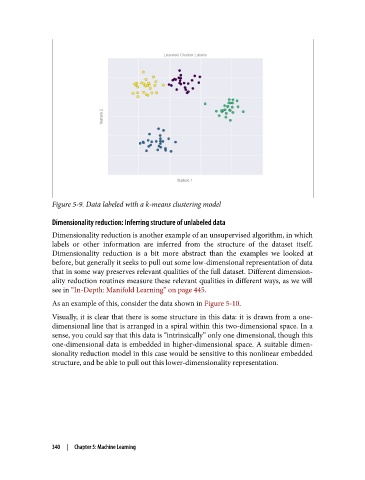
Figure 5-9. Data labeled with a k-means clustering model

               Dimensionality reduction: Inferring structure of unlabeled data

               Dimensionality reduction is another example of an unsupervised algorithm, in which
               labels or other information are inferred from the structure of the dataset itself.
               Dimensionality reduction is a bit more abstract than the examples we looked at
               before, but generally it seeks to pull out some low-dimensional representation of data
               that in some way preserves relevant qualities of the full dataset. Different dimension‐
               ality reduction routines measure these relevant qualities in different ways, as we will
               see in “In-Depth: Manifold Learning” on page 445.
               As an example of this, consider the data shown in Figure 5-10.

               Visually, it is clear that there is some structure in this data: it is drawn from a one-
               dimensional line that is arranged in a spiral within this two-dimensional space. In a
               sense, you could say that this data is “intrinsically” only one dimensional, though this
               one-dimensional data is embedded in higher-dimensional space. A suitable dimen‐
               sionality reduction model in this case would be sensitive to this nonlinear embedded
               structure, and be able to pull out this lower-dimensionality representation.


               340  |  Chapter 5: Machine Learning

