


Page 412 - Python Data Science Handbook
P. 412
In[8]: rng = np.random.RandomState(1)
                          x = 10 * rng.rand(50)
                          y = np.sin(x) + 0.1 * rng.randn(50)

                          poly_model.fit(x[:, np.newaxis], y)
                          yfit = poly_model.predict(xfit[:, np.newaxis])

                          plt.scatter(x, y)
                          plt.plot(xfit, yfit);


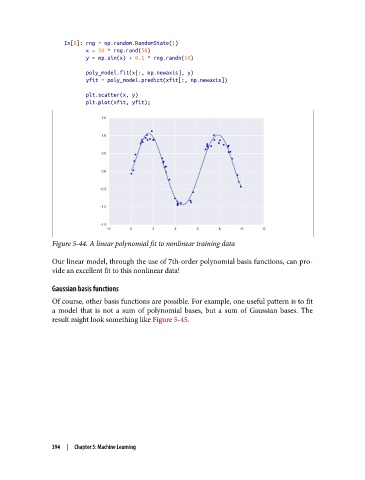
               Figure 5-44. A linear polynomial fit to nonlinear training data

               Our linear model, through the use of 7th-order polynomial basis functions, can pro‐
               vide an excellent fit to this nonlinear data!

               Gaussian basis functions
               Of course, other basis functions are possible. For example, one useful pattern is to fit
               a model that is not a sum of polynomial bases, but a sum of Gaussian bases. The
               result might look something like Figure 5-45.


               394  |  Chapter 5: Machine Learning

