


Page 417 - Python Data Science Handbook
P. 417
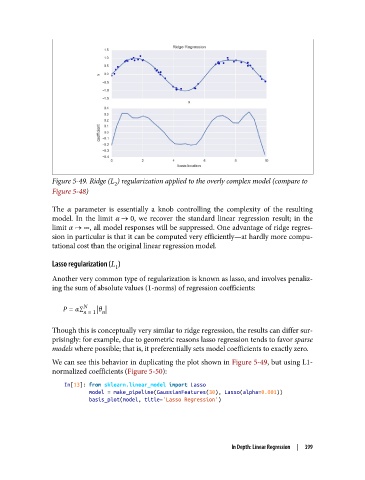
Figure 5-49. Ridge (L ) regularization applied to the overly complex model (compare to
                                 2
               Figure 5-48)

               The α  parameter is essentially a knob controlling the complexity of the resulting
               model. In the limit α  0, we recover the standard linear regression result; in the
               limit α  ∞, all model responses will be suppressed. One advantage of ridge regres‐
               sion in particular is that it can be computed very efficiently—at hardly more compu‐
               tational cost than the original linear regression model.
               Lasso regularization (L )
                                 1
               Another very common type of regularization is known as lasso, and involves penaliz‐
               ing the sum of absolute values (1-norms) of regression coefficients:

                  P = α∑ N  θ n
                        n = 1

               Though this is conceptually very similar to ridge regression, the results can differ sur‐
               prisingly: for example, due to geometric reasons lasso regression tends to favor sparse
               models where possible; that is, it preferentially sets model coefficients to exactly zero.

               We can see this behavior in duplicating the plot shown in Figure 5-49, but using L1-
               normalized coefficients (Figure 5-50):

                   In[13]: from sklearn.linear_model import Lasso
                           model = make_pipeline(GaussianFeatures(30), Lasso(alpha=0.001))
                           basis_plot(model, title='Lasso Regression')


                                                                 In Depth: Linear Regression  |  399

