


Page 272 - Basic Principles of Textile Coloration
P. 272
MORDANT DYES FOR WOOL 261

                            NHCOCH3  SO2NHCH3                HH
                                                     O3S
                            N                                H O OH O H
                               N
                                                             O Cr              SO3
                       O
                     O Cr O                                             O

                                  O                               N
                                                                     N
                          N
                             N                               CI Acid Blue 158

CH3NHSO2
                 CH3CONH

CI Acid Black 60

                 CH3                                         SO3

            NN
            NN

                   O
                  O Cr O

                               O

O3S N N
                          NN

                                                        CH3
                                     CI Acid Violet 90

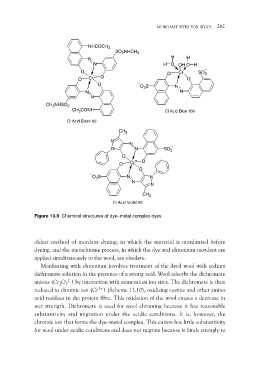
Figure 13.8 Chemical structures of dye–metal complex dyes

oldest method of mordant dyeing, in which the material is mordanted before
dyeing, and the metachrome process, in which the dye and chromium mordant are
applied simultaneously to the wool, are obsolete.

   Mordanting with chromium involves treatment of the dyed wool with sodium
dichromate solution in the presence of a strong acid. Wool adsorbs the dichromate
anions (Cr2O72–) by interaction with ammonium ion sites. The dichromate is then
reduced to chromic ion (Cr3+) (Scheme 13.10), oxidising cystine and other amino
acid residues in the protein fibre. This oxidation of the wool causes a decrease in
wet strength. Dichromate is used for wool chroming because it has reasonable
substantivity and migration under the acidic conditions. It is, however, the
chromic ion that forms the dye–metal complex. This cation has little substantivity
for wool under acidic conditions and does not migrate because it binds strongly to

