


Page 49 - Basic Principles of Textile Coloration
P. 49
38 FIBROUS POLYMERS                 CO2H + HOCH2CH2OH

                          HO2C

HO2C                            CO OCH2CH2O CO                                            CO OCH2CH2OH
                                     Unbranched polyester
                                                                                         n

           CO
              O + HOCH2 CH CH2OH

           CO OH

                                 O
                                 CH CH2 O

                                              OC

O
    CO O CH2 CH CH2 O CO
           CO O
                               OC

                                                       OC
                                                                      Network polyester

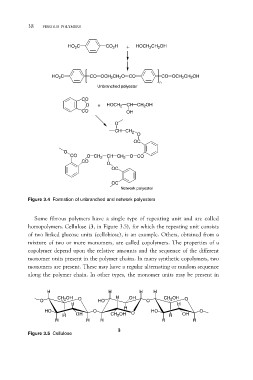
Figure 3.4 Formation of unbranched and network polyesters

   Some fibrous polymers have a single type of repeating unit and are called
homopolymers. Cellulose (3, in Figure 3.5), for which the repeating unit consists
of two linked glucose units (cellobiose), is an example. Others, obtained from a
mixture of two or more monomers, are called copolymers. The properties of a
copolymer depend upon the relative amounts and the sequence of the different
monomer units present in the polymer chains. In many synthetic copolymers, two
monomers are present. These may have a regular alternating or random sequence
along the polymer chain. In other types, the monomer units may be present in

H H HH

O CH2OH O                       HO     H OH                O CH2OH O
                    H                                                          H
                                            H
HO                    OH O          CH2OH O                HO                            OH O
           H                HH                                        H                        H

      H                                                          H

Figure 3.5 Cellulose                3

