


Page 640 - Hall et al (2015) Principles of Critical Care-McGraw-Hill
P. 640
CHAPTER 52: Acute Lung Injury and the Acute Respiratory Distress Syndrome 459
both traditional and more recent approaches to ventilator management, space:tidal volume ratios (V : V ) (eg, up to 75%). 253,254 In some cases,
ds
t
as noted below. One should use sufficient PEEP to reduce the right- patients were exposed to high peak and end-inspiratory pressures due to
to-left shunt to oxygenate the patient. By this approach, clinicians should the large tidal volumes in order to maintain normal arterial blood P CO 2
be able to avoid prolonged exposure of such patients to potentially toxic and pH. Clinicians also used large tidal volumes and high inspiratory
of 0.7 and above). PEEP flow rates as a supplement to sedation to decrease patient discomfort
concentrations of high inspired oxygen (eg, Fi O 2
improves arterial oxygenation, primarily by recruiting collapsed and while receiving assisted ventilation.
partially fluid-filled alveoli and thereby increasing the functional residual For example, if a patient with ARDS had a normal CO production
2
capacity (FRC) at end expiration. 244,245 PEEP redistributes alveolar fluid (eg, 200 mL/min), and a normal V : V of 0.3, then a minute ventila-
t
ds
into the interstitium, which should also improve oxygenation. tion of ~7 L/min is needed to keep the patient’s Pa CO 2 at 40 mm Hg.
246
226
However, when the patient’s V : V increases, then additional minute
Noninvasive Ventilation: Assisted ventilation is generally provided via an ds at 40 mm Hg. In this example, 14 L/min
t
endotracheal tube, but in selected cases noninvasive ventilation (NIV) ventilation is needed to keep Pa CO 2
of minute ventilation is needed if the V : V is 0.66, and 18 L/min is
may be successful 247,248 (see Chap. 44). Although NIV seems to be useful needed if the V : V is 0.75, both of which occur in patients with
ds
t
255
in respiratory failure in immunocompromised hosts, the failure rate ARDS. 253,254 For a patient with a predicted (lean) body weight of 60 kg,
247
ds
t
approaches 50% in such instances. As such, it is generally not a good one can easily achieve a minute ventilation of 18 L/min with tidal
249
choice for most patients with ALI and ARDS and caution is advised if volumes of 600 to 900 mL at rates of 20 to 30 per minute.
it is attempted. This is because ARDS typically has a long course and is
often associated with hemodynamic instability, coma, and multiorgan Goals and Priorities of Lung-Protective Approach The lung-protective approach to
system failure (including ileus). 250 ventilator management has the same goal for oxygenation as the tra-
ditional approach (ie, to maintain an arterial saturation greater than
Comparison of Traditional and Current Approaches to Ventilator Management 88%-90%). However, it gives higher priority to protection from ventila-
Goals and Priorities of the Traditional Approach The traditional approach to ventilator tor-induced lung injury (VILI) (see Chap. 51) than to normalization of
management of patients with ALI and ARDS gave high priority to these arterial P CO 2 and pH. The lung-protective approach’s goal to decrease
251
goals: (1) to maintain arterial O saturation (O saturation) above 88% to risk of VILI often conflicts with the traditional approach’s goal to provide
2
2
90% to provide for adequate tissue oxygenation while trying to minimize a high minute ventilation to keep arterial pH and P CO 2 within normal
lung injury due to high concentrations of inspired oxygen (oxygen tox- limits (see Fig. 52-6). This conflict arises since the current lung-
protective approach reduces the risk of VILI by decreasing the size of
icity); (2) to provide sufficient ventilation to keep arterial pH and Pa O 2
within normal limits (Fig. 52-6). the tidal volume from the traditional 10 to 15 mL/kg body weight to
251
To achieve the first goal, clinicians applied various levels of PEEP. This tidal volumes of 4 to 6 mL/kg predicted body weight (PBW). Even with
use of PEEP was first described in the initial description of ARDS by respiratory rates up to 35/min, such low tidal volumes will limit the
Ashbaugh and coworkers in 1967. Clinicians increased levels of PEEP resultant minute ventilation. This may result in a degree of permissive
10
to below 70% while monitoring for adverse hypercapnia in some patients with ALI and ARDS.
in order to decrease Fi O 2
circulatory effects of PEEP. Since arterial oxygenation was found to For example, for a 60-kg PBW patient, a tidal volume of 6 mL/kg PBW
252
be determined in part by mean airway pressure, they also used relatively (360 mL) with a respiratory rate of 35/min produces a minute ventilation
large tidal volumes of 10 to 15 mL/kg. These were double to triple spon- of only 12.6 L. If one needs to reduce the tidal volume for the same 60-kg
taneous tidal volumes, which are of the order of 5 mL/kg. Both the use PBW patient to 4 mL/kg PBW (240 mL), in order to keep the Pplat from
of PEEP and traditional large tidal volumes (delivered at high flow rates) exceeding the threshold of 30 cm H O, at the same respiratory rate of 35/min
2
generally result in relatively high peak and Pplat in patients with ALI or it provides only 8.4 L of minute ventilation. It is likely that a patient with
ARDS, whose lungs typically have decreased compliance. ARDS ventilated with tidal volumes of 4 to 6 mL/kg PBW has a V : V
t
ds
To achieve the second goal, clinicians ventilated patients with ALI and of 0.66 or greater. This is due to the combined effects of an increased
ARDS with relatively large tidal volumes of 10 to 15 mL/kg at high respi- physiologic dead space in ARDS 253,254 and the fact that ventilating with
ratory rates if needed. The resulting high minute ventilation was needed a lower tidal volume ventilation decreases the denominator of the
to produce a normal alveolar ventilation, because patients with ALI and patient’s V : V . If the patient had a V : V of 0.66, low tidal volume
ds
t
ds
t
ARDS typically have increased physiologic dead space and elevated dead ventilation, which provides 8.4 to 12.6 L/min, will result in permissive
hypercapnia since, as described above, 14 L/min is needed to main-
at 40 mm Hg. For example, for a patient with a
tain this patient’s Pa CO 2
Priority of traditional Priority of lung
ds
t
ventilatory approach Protective ventilatory V : V of 0.66, a minute ventilation of 12.6 L/min would result in a Pa CO 2
of ∼45 mm Hg, while 8.4 L/min of minute ventilation would result in a
1) To maintain arterial approach of ∼65 mm Hg. 255
1) To decrease the risk Pa CO 2
pH and Pa CO 2
within normal limits of ventilator-induced Decreasing the Risk of Ventilator-Induced Lung Injury The important change in
2) To improve patient lung injury (VILI) priority of the lung-protective approach of ventilator management of
comfort during patients with ALI and ARDS compared to the traditional approach is the
assisted ventilation result of a remarkable confluence of two lines of scientific research that
culminated in a landmark confirmatory randomized controlled clinical
trial (RCT) (Fig. 52-7). The first line of basic research initially studied
3
effects of mechanical forces (high pressure or high volume or both) in
animal models of lung injury and then extended these observations to
isolated lungs in situ or in vitro, and eventually to isolated lung cells. The
Increase tidal volume Decrease tidal volume
and plateau pressure and plateau pressure second line of research involved careful clinical observations of patients
with ALI and ARDS that examined the effects of systematic changes in
selected ventilatory parameters with their physiologic effects and radio-
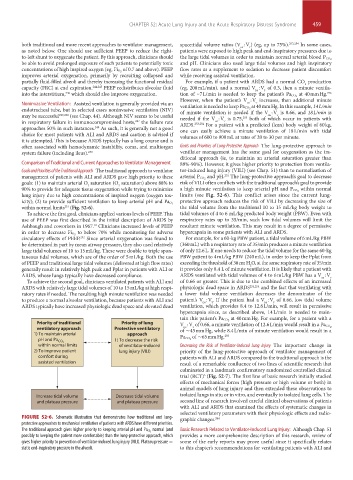
FIGURE 52-6. Schematic illustration that demonstrates how traditional and lung- graphic changes. 244
protective approaches to mechanical ventilation of patients with ARDS have different priorities.
normal (and Basic Research Related to Ventilator-Induced Lung Injury: Although Chap. 51
The traditional approach gives higher priority to keeping arterial pH and Pa CO 2
possibly to keeping the patient more comfortable) than the lung-protective approach, which provides a more comprehensive description of this research, review of
gives higher priority to prevention of ventilator-induced lung injury (VILI). Plateau pressure = some of the early reports may prove useful since it specifically relates
static end-inspiratory pressure in the alveoli. to this chapter’s recommendations for ventilating patients with ALI and
section04.indd 459 1/23/2015 2:19:42 PM

