


Page 855 - Hall et al (2015) Principles of Critical Care-McGraw-Hill
P. 855
586     PART 5: Infectious Disorders


                                                                                 MSSA    Pseudomonas
                                                                                 6%         10%
                                                                                             Acinetobacter
                                           Culture                                              4%
                                          negative
                                            20%
                                                    Empirical therapy
                                                        56%                     MRSA
                                        Specific TX
                                          14%                                    19%


                                                                                    Other +  Enterobacteria a
                                                                                      3%       14%

                                         No MDR risk
                                           10%
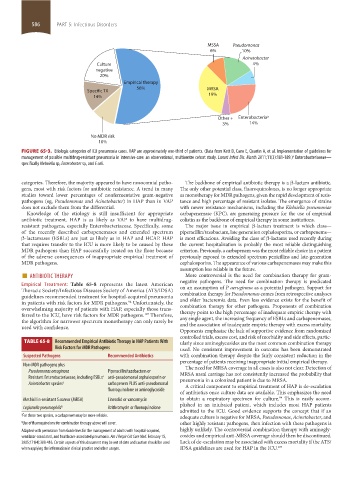
                 FIGURE 65-3.  Etiologic categories of ICU pneumonia cases. VAP are approximately one-third of patients. (Data from Kett D, Cano E, Quartin A, et al. Implementation of guidelines for
                 management of possible multidrug-resistant pneumonia in intensive care: an observational, multicentre cohort study. Lancet Infect Dis. March 2011;11(3):181-189.)  Enterobacteriaceae—
                                                                                                              a
                 specifically Klebsiella sp, Enterobacter sp, and E coli.


                 categories. Therefore, the majority appeared to have nosocomial patho-  The backbone of empirical antibiotic therapy is a β-lactam antibiotic.
                 gens, most with risk factors for antibiotic resistance. A trend in many   The only other potential class, fluoroquinolones, is no longer appropriate
                 studies toward lower percentages of nonfermentative gram-negative   as monotherapy for MDR pathogens, given the rapid development of resis-
                 pathogens (eg, Pseudomonas and Acinetobacter) in HAP than in VAP   tance and high percentage of resistant isolates. The emergence of strains
                 does not exclude them from the differential.          with newer resistance mechanisms, including the Klebsiella pneumoniae
                   Knowledge of the etiology is still insufficient for appropriate   carbapenemase (KPC), are generating pressure for the use of empirical
                 antibiotic treatment. HAP is as likely as VAP to have multidrug-  colistin as the backbone of empirical therapy in some institutions.
                 resistant pathogens, especially Enterobacteriaceae. Specifically, some   The major issue in empirical  β-lactam treatment is which class—
                 of the recently described carbapenemases and extended spectrum   piperacillin/tazobactam, late generation cephalosporins, or carbapenems—
                 β-lactamases (ESBLs) are just as likely as in HAP and HCAP. HAP   is most efficacious. Avoiding the class of β-lactams used recently during
                 that requires transfer to the ICU is more likely to be caused by these   the current hospitalization is probably the most reliable distinguishing
                 MDR pathogens than HAP successfully treated on the floor because   criterion. Previously, a carbapenem was the most reliable choice in a patient
                 of the adverse consequences of inappropriate empirical treatment of   previously exposed to extended spectrum penicillins and late-generation
                 MDR pathogens.                                        cephalosporins. The appearance of various carbapenemases may make this
                     ■  ANTIBIOTIC THERAPY                             assumption less reliable in the future.
                                                                         More controversial is the need for combination therapy for gram-
                 Empirical Treatment:  Table 65-8 represents the latest American   negative  pathogens.  The  need  for  combination  therapy  is  predicated
                 Thoracic Society/Infectious Diseases Society of America (ATS/IDSA)   on an assumption of P aeruginosa as a potential pathogen. Support for
                                                                       combination therapy for Pseudomonas comes from retrospective analyses
                 guidelines recommended treatment for hospital-acquired pneumonia
                                                      94
                 in patients with risk factors for MDR pathogens.  Unfortunately, the   and older bacteremia data. Even less evidence exists for the benefit of
                                                                       combination therapy for other pathogens. Proponents of combination
                 overwhelming majority of patients with HAP, especially those trans-
                 ferred to the ICU, have risk factors for MDR pathogens.  Therefore,   therapy point to the high percentage of inadequate empiric therapy with
                                                           107
                                                                       any single agent, the increasing frequency of ESBLs and carbapenemases,
                 the algorithm for narrower spectrum monotherapy can only rarely be
                 used with confidence.                                 and the association of inadequate empiric therapy with excess mortality.
                                                                       Opponents emphasize the lack of supportive evidence from randomized
                                                                       controlled trials, excess cost, and risk of morbidity and side effects, partic-
                   TABLE 65-8     Recommended Empirical Antibiotic Therapy in HAP Patients With   ularly since aminoglycosides are the most common combination therapy
                             Risk Factors for MDR Pathogens            used. No consistent improvement in outcome has been demonstrated
                  Suspected Pathogens          Recommended Antibiotics  with combination therapy despite the fairly consistent reduction in the
                                                                       percentage of patients receiving inappropriate initial empirical therapy.
                  Non-MDR pathogens plus                                 The need for MRSA coverage in all cases is also not clear. Detection of
                    Pseudomonas aeruginosa     Piperacillin/tazobactam or   MRSA nasal carriage has not consistently increased the probability that
                    Resistant Enterobacteriaceae, including ESBLs  anti-pseudomonal  cephalosporin or   pneumonia in a colonized patient is due to MRSA.
                                             a
                    Acinetobacter species a    carbapenem PLUS  anti-pseudomonal   A critical component to empirical treatment of HAP is de-escalation
                                               fluoroquinolone or aminoglycoside
                                                                       of antibiotics once culture data are available. This emphasizes the need
                                                                                                         94
                  Methicillin-resistant S aureus (MRSA)  Linezolid or vancomycin  to obtain a respiratory specimen for culture.  This is easily accom-
                                                                       plished in an intubated patient, which includes most HAP patients
                  Legionella pneumophila b     Azithromycin or fluoroquinolone
                                                                       admitted to the ICU. Good evidence supports the concept that if an
                 a For these two species, a carbapenem may be more reliable.  adequate culture is negative for MRSA, Pseudomonas, Acinetobacter, and
                 b Use of fluoroquinolone for combination therapy above will cover.  other highly resistant pathogens, then infection with these pathogens is
                 Adapted with permission from Guidelines for the management of adults with hospital-acquired,   highly unlikely. The controversial combination therapy with aminogly-
                 ventilator-associated, and healthcare-associated pneumonia. Am J Respir Crit Care Med. February 15,   cosides and empirical anti-MRSA coverage should then be discontinued.
                 2005;171(4):388-416. Certain aspects of this document may be out of date and caution should be used   Lack of de-escalation may be associated with excess mortality if the ATS/
                 when applying the information in clinical practice and other usages.  IDSA guidelines are used for HAP in the ICU. 107


            section05_c61-73.indd   586                                                                                1/23/2015   12:47:57 PM

