


Page 858 - Hall et al (2015) Principles of Critical Care-McGraw-Hill
P. 858
CHAPTER 66: Infectious Complications of Intravascular Access Devices Used in Critical Care   589


                                                                          chlorhexidine as an antiseptic, the use of transparent dressings (in some
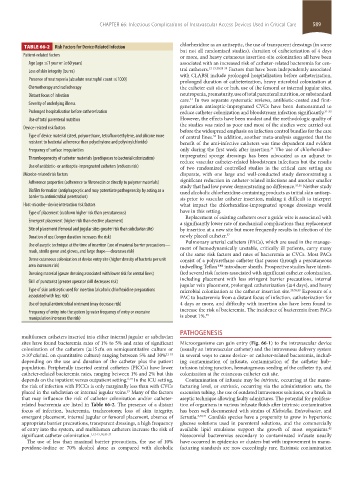
                      TABLE 66-2    Risk Factors for Device-Related Infection
                                                                          but not all randomized studies), duration of catheterization of 4 days
                    Patient-related factors                               or more, and heavy cutaneous insertion-site colonization all have been
                      Age (age ≤1 year or ≥60 years)                      associated with an increased risk of catheter-related bacteremia for cen-
                      Loss of skin integrity (burns)                      tral catheters. 12-15,20,28-30  Factors that have been independently associated
                                                                          with CLABSI include prolonged hospitalization before catheterization,
                      Presence of neutropenia (absolute neutrophil count ≤1000)  prolonged duration of catheterization, heavy microbial colonization at
                      Chemotherapy and radiotherapy                       the catheter exit site or hub, use of the femoral or internal jugular sites,
                      Distant focus of infection                          neutropenia, prematurity, use of total parenteral nutrition, or substandard
                                                                          care.  In two separate systematic reviews, antibiotic-coated and first-
                                                                             31
                      Severity of underlying illness
                                                                          generation antiseptic-impregnated CVCs have been demonstrated to
                      Prolonged hospitalization before catheterization    reduce catheter colonization and bloodstream infection significantly. 31-33
                      Use of total parenteral nutrition                   However, the effects have been modest and the methodologic quality of
                                                                          the studies was rated as poor and most of the studies were carried out
                    Device-related risk factors
                                                                          before the widespread emphasis on infection control bundles for the care
                       Type of device material (steel, polyurethane, tetrafluoroethylene, and silicone more   of central lines.  In addition, another meta-analysis suggested that the
                                                                                     33
                      resistant to bacterial adherence than polyethylene and polyvinylchloride)  benefit of the anti-infective catheters was time dependent and evident
                                                                                                        34
                      Frequency of surface irregularities                 only during the first week after insertion.  The use of chlorhexidine-
                                                                          impregnated sponge dressings has been advocated as an adjunct to
                      Thrombogenecity of catheter materials (predisposes to bacterial colonization)
                                                                          reduce vascular catheter-related bloodstream infections but the results
                      Use of antibiotic- or antiseptic-impregnated catheters (reduces risk)  of two randomized controlled studies in the critical care setting are
                    Microbe-related risk factors                          disparate, with one large and well-conducted study demonstrating a
                                                                          significant reduction in catheter-related infections and another smaller
                      Adherence properties (adherence to fibronectin or directly to polymer materials)  study that had low power demonstrating no difference. 35,36  Neither study
                       Biofilm formation (antiphagocytic and may potentiate pathogenecity by acting as a   used alcoholic chlorhexidine-containing products as initial skin antisep-
                      barrier to antimicrobial penetration)               sis prior to vascular catheter insertion, making it difficult to interpret
                    Host-microbe–device interaction risk factors          what impact the chlorhexidine-impregnated sponge dressings would
                      Type of placement (cutdown higher risk than percutaneous)  have in this setting.
                                                                           Replacement of existing catheters over a guide wire is associated with
                      Emergent placement (higher risk than elective placement)
                                                                          a significantly lower rate of mechanical complications than replacement
                      Site of placement (femoral and jugular sites greater risk than subclavian site)  by insertion at a new site but more frequently results in infection of the
                      Duration of use (longer duration increases the risk)  newly placed catheter. 37
                                                                           Pulmonary arterial catheters (PACs), which are used in the manage-
                       Use of aseptic technique at the time of insertion (use of maximal barrier precautions—  ment of hemodynamically unstable, critically ill patients, carry many
                      mask, sterile gown and gloves, and large drape—decreases risk)
                                                                          of the same risk factors and rates of bacteremia as CVCs. Most PACs
                       Dense cutaneous colonization at device entry site (higher density of bacteria per unit   consist of a polyurethane catheter that passes through a percutaneous
                      area increases risk)                                indwelling Teflon™ introducer sheath. Prospective studies have identi-
                      Dressing material (gauze dressing associated with lower risk for central lines)  fied several risk factors associated with significant catheter colonization,
                                                                          including placement with less stringent barrier precautions, internal
                      Skill of puncturist (greater operator skill decreases risk)  jugular vein placement, prolonged catheterization (≥4 days), and heavy
                       Type of skin antiseptic used for insertion (alcoholic chlorhexidine preparations    microbial colonization at the catheter insertion site. 20,38,39  Exposure of a
                      associated with less risk)                          PAC to bacteremia from a distant focus of infection, catheterization for
                      Use of topical antimicrobial ointment (may decrease risk)  4 days or more, and difficulty with insertion also have been found to
                       Frequency of entry into the system (greater frequency of entry or excessive    increase the risk of bacteremia. The incidence of bacteremia from PACs
                                                                                  39
                      manipulation increases the risk)                    is about 1%.
                                                                          PATHOGENESIS
                    multilumen catheters inserted into either internal jugular or subclavian
                    sites have found bacteremia rates of 1% to 5% and rates of significant   Microorganisms can gain entry (Fig. 66-1) to the intravascular device
                    colonization of the catheters (≥15 cfu on semiquantitative culture or   (usually an intravascular catheter) and the intravenous delivery system
                    ≥10  cfu/mL on quantitative culture) ranging between 5% and 30% 11-18    in several ways to cause device- or catheter-related bacteremia, includ-
                       3
                    depending on the use and duration of the catheter plus the patient   ing contamination of infusate, contamination of the catheter hub–
                    population. Peripherally inserted central catheters (PICCs) have lower   infusion tubing junction, hematogenous seeding of the catheter tip, and
                    catheter-related bacteremia rates, ranging between 1% and 2% but this   colonization at the cutaneous catheter exit site.
                    depends on the inpatient versus outpatient setting.  In the ICU setting,   Contamination of infusate may be intrinsic, occurring at the manu-
                                                        6,19
                    the risk of infection with PICCs is only marginally less than with CVCs   facturing level, or  extrinsic, occurring via the administration sets, the
                    placed in the subclavian or internal jugular veins.  Many of the factors   extension tubing, the use of outdated intravenous solutions, or a break in
                                                        19
                    that may influence the risk of catheter colonization and/or catheter-  aseptic technique allowing faulty admixtures. The potential for prolifera-
                    related bacteremia are listed in Table 66-2. The presence of a distant   tion of organisms in various infusate fluids after intrinsic contamination
                    focus of infection, bacteremia, tracheostomy, loss of skin integrity,   has been well documented with strains of Klebsiella, Enterobacter, and
                    emergent placement, internal jugular or femoral placement, absence of   Serratia. 3,40,41  Candida species have a propensity to grow in hypertonic
                    appropriate barrier precautions, transparent dressings, a high frequency   glucose solutions used in parenteral solutions, and the commercially
                    of entry into the system, and multilumen catheters increase the risk of   available lipid emulsions support the growth of most organisms.
                                                                                                                            42
                    significant catheter colonization. 1,12-15,18,20-27   Nosocomial bacteremias secondary to contaminated infusate usually
                     The use of less than maximal barrier precautions, the use of 10%   have occurred in epidemics or clusters but with improvement in manu-
                    povidone-iodine or 70% alcohol alone as compared with alcoholic   facturing standards are now exceedingly rare. Extrinsic contamination


            section05_c61-73.indd   589                                                                                1/23/2015   12:47:58 PM

