


Page 187 - Clinical Anatomy
P. 187
ECA3  7/18/06  6:45 PM  Page 172


                 172  The upper limb


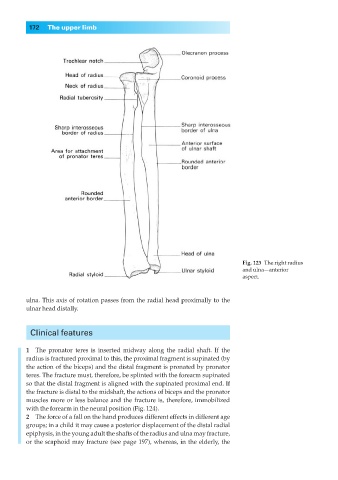
                                                                              Fig. 123◊The right radius
                                                                              and ulna—anterior
                                                                              aspect.


                ulna. This axis of rotation passes from the radial head proximally to the
                ulnar head distally.


                 Clinical features

                1◊◊The pronator teres is inserted midway along the radial shaft. If the
                radius is fractured proximal to this, the proximal fragment is supinated (by
                the action of the biceps) and the distal fragment is pronated by pronator
                teres. The fracture must, therefore, be splinted with the forearm supinated
                so that the distal fragment is aligned with the supinated proximal end. If
                the fracture is distal to the midshaft, the actions of biceps and the pronator
                muscles more or less balance and the fracture is, therefore, immobilized
                with the forearm in the neural position (Fig. 124).
                2◊◊The force of a fall on the hand produces different effects in different age
                groups; in a child it may cause a posterior displacement of the distal radial
                epiphysis, in the young adult the shafts of the radius and ulna may fracture,
                or the scaphoid may fracture (see page 197), whereas, in the elderly, the

