


Page 129 - The Netter Collection of Medical Illustrations - Integumentary System_ Volume 4 ( PDFDrive )
P. 129
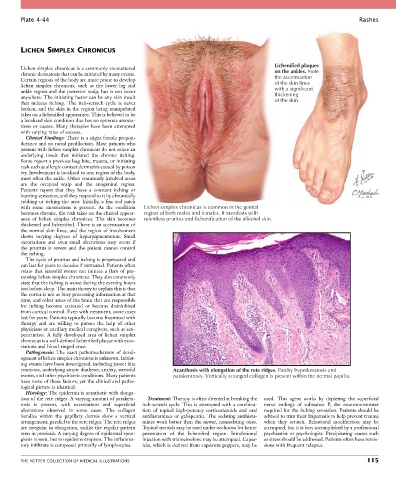
Plate 4-44                                                                                                           Rashes


        LICHEN SIMPLEX CHRONICUS


        Lichen simplex chronicus is a commonly encountered                                      Lichenified plaques
        chronic dermatosis that can be initiated by many events.                                on the ankles. Note
        Certain regions of the body are more prone to develop                                   the accentuation
        lichen  simplex  chronicus,  such  as  the  lower  leg  and                             of the skin lines
        ankle region and the posterior scalp, but it can occur                                  with a significant
        anywhere. The initiating factor can be any skin insult                                  thickening
        that  induces  itching.  The  itch-scratch  cycle  is  never                            of the skin.
        broken, and the skin in the region being manipulated
        takes on a lichenified appearance. This is believed to be
        a localized skin condition that has no systemic associa-
        tions  or  causes.  Many  therapies  have  been  attempted
        with varying rates of success.
          Clinical Findings: There is a slight female prepon-
        derance and no racial predilection. Most patients who
        present with lichen simplex chronicus do not relate an
        underlying  insult  that  initiated  the  chronic  itching.
        Some report a previous bug bite, trauma, or initiating
        rash such as allergic contact dermatitis caused by poison
        ivy. Involvement is localized to one region of the body,
        most often the ankle. Other commonly involved areas
        are  the  occipital  scalp  and  the  anogenital  region.
        Patients  report  that  they  have  a  constant  itching  or
        burning sensation, and they respond to it by chronically
        rubbing or itching the area. Initially, a fine red patch
        with  some  excoriations  is  present.  As  the  condition   Lichen simplex chronicus is common in the genital
        becomes chronic, the rash takes on the clinical appear-  region of both males and females. It manifests with
        ance  of  lichen  simplex  chronicus.  The  skin  becomes   relentless pruritus and lichenification of the affected skin.
        thickened and lichenified. There is an accentuation of
        the  normal  skin  lines,  and  the  region  of  involvement
        shows  varying  degrees  of  hyperpigmentation.  Small
        excoriations  and  even  small  ulcerations  may  occur  if
        the  pruritus  is  severe  and  the  patient  cannot  control
        the itching.
          The cycle of pruritus and itching is perpetuated and
        can last for years to decades if untreated. Patients often
        relate  that  stressful  events  can  initiate  a  flare  of  pre-
        existing lichen simplex chronicus. They also commonly
        state that the itching is worse during the evening hours
        just before sleep. The main theory to explain this is that
        the cortex is not as busy processing information at that
        time, and other areas of the brain that are responsible
        for  itching  become  activated  or  become  disinhibited
        from cortical control. Even with treatment, some cases
        last for years. Patients typically become frustrated with
        therapy  and  are  willing  to  pursue  the  help  of  other
        physicians or ancillary medical caregivers, such as acu-
        puncturists.  A  fully  developed  area  of  lichen  simplex
        chronicus is a well-defined lichenified plaque with exco-
        riations and blood-tinged crust.
          Pathogenesis: The exact pathomechanism of devel-
        opment of lichen simplex chronicus is unknown. Initiat-
        ing events have been investigated, including insect bite
        reactions, underlying atopic diathesis, anxiety, stressful   Acanthosis with elongation of the rete ridges. Patchy hyperkeratosis and
        events, and other psychiatric conditions. Many patients   parakeratosis. Vertically arranged collagen is present within the dermal papilla.
        have none of these factors, yet the clinical and patho-
        logical picture is identical.
          Histology: The epidermis is acanthotic with elonga-
        tion of the rete ridges. A varying amount of parakera-  Treatment: Therapy is often directed at breaking the   used.  This  agent  works  by  depleting  the  superficial
        tosis  is  present,  with  excoriations  and  superficial   itch-scratch cycle. This is attempted with a combina-  nerve  endings  of  substance  P,  the  neurotransmitter
        ulcerations  observed  in  some  cases.  The  collagen   tion  of  topical  high-potency  corticosteroids  and  oral   required for the itching sensation. Patients should be
        bundles  within  the  papillary  dermis  show  a  vertical   antihistamines  or  gabapentin.  The  sedating  antihista-  advised to trim their fingernails to help prevent trauma
        arrangement, parallel to the rete ridges. The rete ridges   mines work better than the newer, nonsedating ones.   when  they  scratch.  Behavioral  modification  may  be
        are irregular in elongation, unlike the regular pattern   Topical steroids may be used under occlusion for better   attempted, but it is best accomplished by a professional
        seen in psoriasis. A varying degree of epidermal spon-  penetration  of  the  lichenified  region.  Intralesional   psychiatrist or psychologist. Precipitating causes such
        giosis is seen, but no epidermotropism. The inflamma-  injection with triamcinolone may be attempted. Capsa-  as stress should be addressed. Patients often have remis-
        tory infiltrate is composed primarily of lymphocytes.  icin, which is derived from capsicum peppers, may be   sions with frequent relapses.


        THE NETTER COLLECTION OF MEDICAL ILLUSTRATIONS                                                                          115

