


Page 124 - The Netter Collection of Medical Illustrations - Integumentary System_ Volume 4 ( PDFDrive )
P. 124
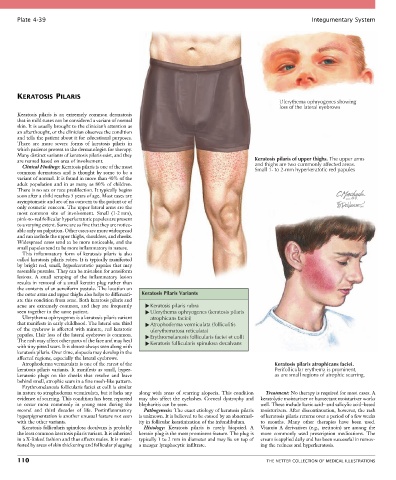
Plate 4-39                                                                                            Integumentary System


       KERATOSIS PILARIS
                                                                                                 Ulerythema ophryogenes showing
                                                                                                 loss of the lateral eyebrows
       Keratosis  pilaris  is  an  extremely  common  dermatosis
       that in mild states can be considered a variant of normal
       skin. It is usually brought to the clinician’s attention as
       an afterthought, or the clinician observes the condition
       and tells the patient about it for educational purposes.
       There  are  more  severe  forms  of  keratosis  pilaris  in
       which patients present to the dermatologist for therapy.
       Many distinct variants of keratosis pilaris exist, and they
       are named based on area of involvement.                                           Keratosis pilaris of upper thighs. The upper arms
         Clinical Findings: Keratosis pilaris is one of the most                         and thighs are two commonly affected areas.
       common  dermatoses  and  is  thought  by  some  to  be  a                         Small 1- to 2-mm hyperkeratotic red papules
       variant of normal. It is found in more than 40% of the
       adult population and  in  as many  as  80%  of  children.
       There is no sex or race predilection. It typically begins
       soon after a child reaches 5 years of age. Most cases are
       asymptomatic and are of no concern to the patient or of
       only cosmetic concern. The upper lateral arms are the
       most  common  site  of  involvement.  Small  (1-2 mm),
       pink-to-red follicular hyperkeratotic papules are present
       to a varying extent. Some are so fine that they are notice-
       able only on palpation. Other cases are more widespread
       and can include the upper thighs, shoulders, and cheeks.
       Widespread cases tend to be more noticeable, and the
       small papules tend to be more inflammatory in nature.
         This  inflammatory  form  of  keratosis  pilaris  is  also
       called keratosis pilaris rubra. It is typically manifested
       by bright red, small, hyperkeratotic papules that may
       resemble pustules. They can be mistaken for acneiform
       lesions.  A  small  scraping  of  the  inflammatory  lesion
       results in removal of a small keratin plug rather than
       the contents of an acneiform pustule. The location on
       the outer arms and upper thighs also helps to differenti-  Keratosis Pilaris Variants
       ate this condition from acne. Both keratosis pilaris and
       acne  are  extremely  common,  and  they  are  frequently   Keratosis pilaris rubra
       seen together in the same patient.            Ulerythema ophryogenes (keratosis pilaris
         Ulerythema ophryogenes is a keratosis pilaris variant   atrophicans faciei)
       that manifests in early childhood. The lateral one third   Atrophoderma vermiculata (folliculitis
       of  the  eyebrow  is  affected  with  minute,  red  keratotic   ulerythematosa reticulata)
       papules. Hair loss of the lateral eyebrows is common.   Erythromelanosis follicularis faciei et colli
       The rash may affect other parts of the face and may heal   Keratosis follicularis spinulosa decalvans
       with tiny pitted scars. It is almost always seen along with
       keratosis pilaris. Over time, alopecia may develop in the
       affected regions, especially the lateral eyebrows.
         Atrophoderma vermiculata is one of the rarest of the                                   Keratosis pilaris atrophicans faciei.
       keratosis pilaris variants. It manifests as small, hyper-                                Perifollicular erythema is prominent,
       keratotic  plugs  on  the  cheeks  that  resolve  and  leave                             as are small regions of atrophic scarring.
       behind small, atrophic scars in a fine mesh-like pattern.
         Erythromelanosis follicularis faciei et colli is similar
       in nature to atrophoderma vermiculata, but it lacks any   along  with  areas  of  scarring  alopecia.  This  condition   Treatment: No therapy is required for most cases. A
       evidence of scarring. This condition has been reported   may  also  affect  the  eyelashes.  Corneal  dystrophy  and   keratolytic moisturizer or humectant moisturizer works
       to  occur  most  commonly  in  young  men  during  the   blepharitis can be seen.   well. These include lactic acid– and salicylic acid–based
       second  and  third  decades  of  life.  Postinflammatory   Pathogenesis: The exact etiology of keratosis pilaris   moisturizers. After discontinuation, however, the rash
       hyperpigmentation is another unusual feature not seen   is unknown. It is believed to be caused by an abnormal-  of keratosis pilaris returns over a period of a few weeks
       with the other variants.                  ity in follicular keratinization of the infundibulum.  to  months.  Many  other  therapies  have  been  used.
         Keratosis follicularis spinulosa decalvans is probably   Histology:  Keratosis  pilaris  is  rarely  biopsied.  A   Vitamin  A  derivatives  (e.g.,  tretinoin)  are  among  the
       the least common keratosis pilaris variant. It is inherited   keratin plug is the most prominent feature. The plug is   more  commonly  used  prescription  medications.  The
       in a X-linked fashion and thus affects males. It is mani-  typically 1 to 2 mm in diameter and may lie on top of   cream is applied daily and has been successful in remov-
       fested by areas of skin thickening and follicular plugging   a meager lymphocytic infiltrate.  ing the redness and hyperkeratosis.

       110                                                                                   THE NETTER COLLECTION OF MEDICAL ILLUSTRATIONS

