


Page 126 - The Netter Collection of Medical Illustrations - Integumentary System_ Volume 4 ( PDFDrive )
P. 126
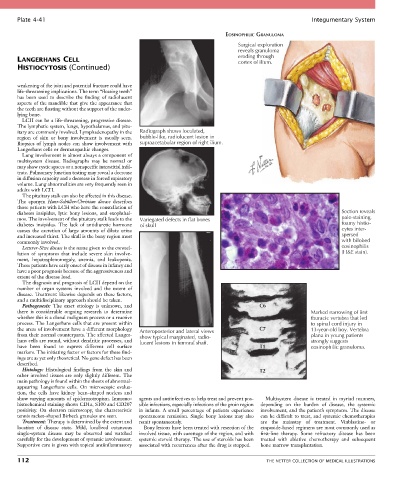
Plate 4-41                                                                                            Integumentary System

                                                                               EOSINOPHILIC GRANULOMA
                                                                                   Surgical exploration
                                                                                   reveals granuloma
       LANGERHANS CELL                                                             eroding through
                                                                                   cortex of ilium.
       HISTIOCYTOSIS (Continued)


       weakening of the joint and potential fracture could have
       life-threatening implications. The term “floating teeth”
       has  been  used  to  describe  the  finding  of  radiolucent
       aspects of the mandible that give the appearance that
       the teeth are floating without the support of the under-
       lying bone.
         LCH can be a life-threatening, progressive disease.
       The lymphatic system, lungs, hypothalamus, and pitu-
       itary are commonly involved. Lymphadenopathy in the   Radiograph shows loculated,
       region  of  skin  or  bony  involvement  is  usually  seen.   bubble-like, radiolucent lesion in
       Biopsies  of  lymph  nodes  can  show  involvement  with   supraacetabular region of right ilium.
       Langerhans cells or dermatopathic changes.
         Lung involvement is almost always a component of
       multisystem  disease.  Radiographs  may  be  normal  or
       may show cystic spaces or a nonspecific interstitial infil-
       trate. Pulmonary function testing may reveal a decrease
       in diffusion capacity and a decrease in forced expiratory
       volume. Lung abnormalities are very frequently seen in
       adults with LCH.
         The pituitary stalk can also be affected in this disease.
       The  eponym  Hans-Schüller-Christian  disease  describes
       those patients with LCH who have the constellation of
       diabetes  insipidus,  lytic  bony  lesions,  and  exophthal-                                                    Section reveals
       mos. The involvement of the pituitary stalk leads to the   Variegated defects in flat bones                     pale-staining,
       diabetes  insipidus.  The  lack  of  antidiuretic  hormone   of skull                                           foamy histio-
       causes  the  excretion  of  large  amounts  of  dilute  urine                                                   cytes inter-
       and increased thirst. The skull is the bony region most                                                         spersed
       commonly involved.                                                                                              with bilobed
         Letterer-Siwe disease is the name given to the constel-                                                       eosinophilis
       lation  of  symptoms  that  include  severe  skin  involve-                                                     (H&E stain).
       ment,  hepatosplenomegaly,  anemia,  and  leukopenia.
       These patients have early onset of disease in infancy and
       have a poor prognosis because of the aggressiveness and
       extent of the disease load.
         The diagnosis and prognosis of LCH depend on the
       number  of  organ  systems  involved  and  the  extent  of
       disease.  Treatment  likewise  depends  on  these  factors,
       and a multidisciplinary approach should be taken.
         Pathogenesis:  The  exact  etiology  is  unknown,  and                            C6
       there  is  considerable  ongoing  research  to  determine                                            Marked narrowing of first
       whether this is a clonal malignant process or a reactive                                             thoracic vertebra that led
       process. The Langerhans cells that are present within                                                to spinal cord injury in
       the areas of involvement have a different morphology   Anteroposterior and lateral views   C7        13-year-old boy. Vertebra
       from their normal counterparts. The affected Langer-  show typical marginated, radio-                plana in young patients
       hans cells are round, without dendritic processes, and   lucent lesions in femoral shaft.            strongly suggests
       have  been  found  to  express  different  cell  surface                            T1               eosinophilic granuloma.
       markers. The initiating factor or factors for these find-
       ings are as yet only theoretical. No gene defect has been
       described.
         Histology:  Histological  findings  from  the  skin  and                          T2
       other involved tissues are only slightly different. The
       main pathology is found within the sheets of abnormal-
       appearing  Langerhans  cells.  On  microscopic  evalua-
       tion,  the  cells  have  kidney  bean–shaped  nucleus  and
       show varying amounts of epidermotropism. Immuno-  agents and antiinfectives to help treat and prevent pos-  Multisystem  disease  is  treated  in  myriad  manners,
       histochemical staining shows CD1a, S100 and CD207   sible infections, especially infections of the groin region   depending  on  the  burden  of  disease,  the  systemic
       positivity.  On  electron  microscopy,  the  characteristic   in  infants.  A  small  percentage  of  patients  experience   involvement, and the patient’s symptoms. The disease
       tennis racket–shaped Birbeck granules are seen.  spontaneous  remission.  Single  bony  lesions  may  also   can be difficult to treat, and systemic chemotherapies
         Treatment: Therapy is determined by the extent and   remit spontaneously.         are  the  mainstay  of  treatment.  Vinblastine-  or
       location  of  disease  state.  Mild,  localized  cutaneous   Bony lesions have been treated with resection of the   etoposide-based regimens are most commonly used as
       single-system  disease  may  be  observed  and  watched   involved tissue, with curettage of the region, and with   first-line  therapy.  Some  refractory  disease  has  been
       carefully for the development of systemic involvement.   systemic steroid therapy. The use of steroids has been   treated  with  ablative  chemotherapy  and  subsequent
       Supportive care is given with topical antiinflammatory   associated with recurrences after the drug is stopped.  bone marrow transplantation.

       112                                                                                   THE NETTER COLLECTION OF MEDICAL ILLUSTRATIONS

