


Page 132 - The Netter Collection of Medical Illustrations - Integumentary System_ Volume 4 ( PDFDrive )
P. 132
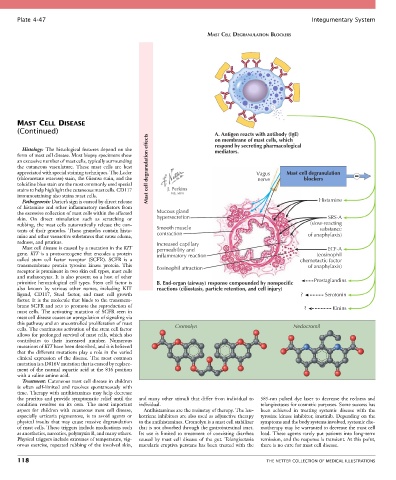
Plate 4-47                                                                                            Integumentary System

                                                                         MAST CELL DEGRANULATION BLOCKERS


       MAST CELL DISEASE
       (Continued)                                                         A. Antigen reacts with antibody (IgE)

                                                                           on membrane of mast cells, which
         Histology:  The  histological  features  depend  on  the          respond by secreting pharmacological
                                                                           mediators.
       form of mast cell disease. Most biopsy specimens show
       an excessive number of mast cells, typically surrounding
       the  cutaneous  vasculature.  These  mast  cells  are  best   Mast cell degranulation effects
       appreciated with special staining techniques. The Leder                            Vagus     Mast cell degranulation
       (chloracetate esterase) stain, the Giemsa stain, and the                           nerve           blockers
       toluidine blue stain are the most commonly used special
       stains to help highlight the cutaneous mast cells. CD117
       immunostaining also stains mast cells.
         Pathogenesis: Darier’s sign is caused by direct release                                               Histamine
       of  histamine  and  other  inflammatory  mediators  from
       the excessive collection of mast cells within the affected   Mucous gland
       skin.  On  direct  stimulation  such  as  scratching  or   hypersecretion                                  SRS-A
       rubbing, the mast cells automatically release the con-                                               (slow-reacting
       tents of their granules. These granules contain hista-  Smooth muscle                                   substance
       mine and other vasoactive substances that cause edema,   contraction                                of anaphylaxis)
       redness, and pruritus.                          Increased capillary
         Mast cell disease is caused by a mutation in the KIT   permeability and                                  ECF-A
       gene. KIT  is a  protooncogene  that encodes  a  protein   inflammatory reaction                       (eosinophil
       called  stem  cell  factor  receptor  (SCFR).  SCFR  is  a                                        chemotactic factor
       transmembrane  protein  tyrosine  kinase  protein.  This   Eosinophil attraction                    of anaphylaxis)
       receptor is prominent in two skin cell types, mast cells
       and melanocytes. It is also present on a host of other
       primitive hematological cell types. Stem cell factor is   B. End-organ (airway) response compounded by nonspecific  Prostaglandins
       also  known  by  various  other  names,  including  KIT   reactions (ciliostasis, particle retention, and cell injury)
       ligand,  CD117,  Steel  factor,  and  mast  cell  growth                                          ?       Serotonin
       factor. It is the molecule that binds to the transmem-
       brane SCFR and acts to promote the reproduction of                                                 ?         Kinins
       mast  cells.  The  activating  mutation  of  SCFR  seen  in
       mast cell disease causes an upregulation of signaling via
       this pathway and an uncontrolled proliferation of mast   Cromolyn                              Nedocromil
       cells. The continuous activation of the stem cell factor
       allows for prolonged survival of mast cells, which also
       contributes  to  their  increased  number.  Numerous
       mutations of KIT have been described, and it is believed
       that  the  different  mutations  play  a  role  in  the  varied
       clinical  expression  of  the  disease.  The  most  common
       mutation is a D816V mutation that is caused by replace-
       ment  of  the  normal  aspartic  acid  at  the  816  position
       with a valine amino acid.
         Treatment: Cutaneous mast cell disease in children
       is  often  self-limited  and  resolves  spontaneously  with
       time. Therapy with antihistamines may help decrease
       the  pruritus  and  provide  symptomatic  relief  until  the   and many other stimuli that differ from individual to   585-nm  pulsed  dye  laser  to  decrease  the  redness  and
       condition  resolves  on  its  own.  The  most  important   individual.              telangiectases for cosmetic purposes. Some success has
       aspect  for  children  with  cutaneous  mast  cell  disease,   Antihistamines are the mainstay of therapy. The leu-  been  achieved  in  treating  systemic  disease  with  the
       especially  urticaria  pigmentosa,  is  to  avoid  agents  or   kotriene inhibitors are also used as adjunctive therapy   tyrosine kinase inhibitor, imatinib. Depending on the
       physical insults that may cause massive degranulation   to the antihistamines. Cromolyn is a mast cell stabilizer   symptoms and the body systems involved, systemic che-
       of mast cells. These triggers include medications such   that is not absorbed through the gastrointestinal tract.   motherapy may be warranted to decrease the mast cell
       as anesthetics, narcotics, polymyxin B, and many others.   Its  use  is  limited  to  treatment  of  coexisting  diarrhea   load. These agents rarely put patients into long-term
       Physical triggers include extremes of temperature, vig-  caused  by  mast  cell  disease  of  the  gut.  Telangiectasia   remission, and the response is transient. At this point,
       orous exercise, repeated rubbing of the involved skin,   macularis eruptiva perstans has been treated with the   there is no cure for mast cell disease.

       118                                                                                   THE NETTER COLLECTION OF MEDICAL ILLUSTRATIONS

