


Page 172 - The Netter Collection of Medical Illustrations - Integumentary System_ Volume 4 ( PDFDrive )
P. 172
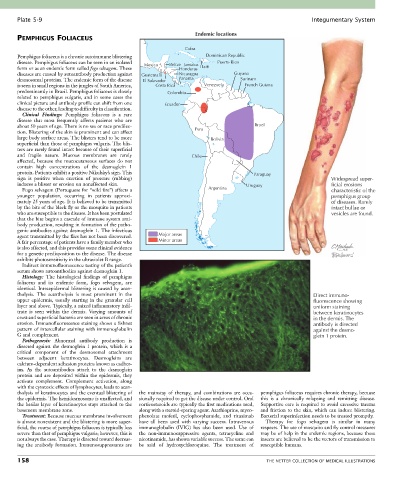
Plate 5-9                                                                                             Integumentary System

                                                                    Endemic locations
       PEMPHIGUS FOLIACEUS
                                                                 Cuba
       Pemphigus foliaceus is a chronic autoimmune blistering           Dominican Republic
       disease. Pemphigus foliaceus can be seen in an isolated   Mexico  Belize  Jamaica  Puerto Rico
       form or as an endemic form called fogo selvagem. These   Honduras  Haiti
       diseases are caused by autoantibody production against   Guatemala  Nicaragua  Guyana
       desmosomal proteins. The endemic form of the disease   El Salavador  Panama  Surinam
       is seen in small regions in the jungles of South America,   Costa Rica  Venezuela  French Guiana
       predominantly in Brazil. Pemphigus foliaceus is closely   Colombia
       related  to  pemphigus  vulgaris,  and  in  some  cases  the
       clinical picture and antibody profile can shift from one   Ecuador
       disease to the other, leading to difficulty in classification.
         Clinical  Findings:  Pemphigus  foliaceus  is  a  rare
       disease  that  most  frequently  affects  patients  who  are
       about 50 years of age. There is no sex or race predilec-                          Brazil
       tion. Blistering of the skin is prominent and can affect     Peru
       large body surface areas. The blisters tend to be more             Bolivia
       superficial than those of pemphigus vulgaris. The blis-
       ters are rarely found intact because of their superficial
       and  fragile  nature.  Mucous  membranes  are  rarely       Chile
       affected,  because  the  mucocutaneous  surfaces  do  not
       contain  high  concentrations  of  the  desmoglein  1
       protein. Patients exhibit a positive Nikolsky’s sign. This                        Paraguay
       sign  is  positive  when  exertion  of  pressure  (rubbing)                                                 Widespread super-
       induces a blister or erosion on nonaffected skin.                              Uruguay                      ficial erosions
         Fogo selvagem (Portuguese for “wild fire”) affects a            Argentina                                 characteristic of the
       younger  population,  occurring  in  patients  approxi-                                                     pemphigus group
       mately 25 years of age. It is believed to be transmitted                                                    of diseases. Rarely
       by the bite of the black fly or the mosquito in patients                                                    intact bullae or
       who are susceptible to the disease. It has been postulated                                                  vesicles are found.
       that the bite begins a cascade of immune system anti-
       body production, resulting in formation of the patho-
       genic antibodies against desmoglein 1. The infectious
       agent transmitted by the flies has not been discovered.   Major areas
       A fair percentage of patients have a family member who   Minor areas
       is also affected, and this provides some clinical evidence
       for a genetic predisposition to the disease. The disease
       exhibits photosensitivity in the ultraviolet B range.
         Indirect immunofluorescence testing of the patient’s
       serum shows autoantibodies against desmoglein 1.
         Histology:  The  histological  findings  of  pemphigus
       foliaceus  and  its  endemic  form,  fogo  selvagem,  are
       identical. Intraepidermal blistering is caused by acan-
       tholysis.  The  acantholysis  is  most  prominent  in  the                                            Direct immuno-
       upper  epidermis,  usually  starting  in  the  granular  cell                                         fluorescence showing
       layer and above. Typically, a mixed inflammatory infil-                                               uniform staining
       trate  is  seen  within  the  dermis.  Varying  amounts  of                                           between keratinocytes
       crust and superficial bacteria are seen in areas of chronic                                           in the dermis. The
       erosion. Immunofluorescence staining shows a fishnet                                                  antibody is directed
       pattern of intercellular staining with immunoglobulin                                                 against the desmo-
       G and complement.                                                                                     glein 1 protein.
         Pathogenesis:  Abnormal  antibody  production  is
       directed against the desmoglein 1 protein, which is a
       critical  component  of  the  desmosomal  attachment
       between  adjacent  keratinocytes.  Desmogleins  are
       calcium-dependent adhesion proteins known as cadher-
       ins.  As  the  autoantibodies  attach  to  the  desmoglein
       protein  and  are  deposited  within  the  epidermis,  they
       activate  complement.  Complement  activation,  along
       with the cytotoxic effects of lymphocytes, leads to acan-
       tholysis of keratinocytes and the eventual blistering of   the  mainstay  of  therapy,  and  combinations  are  occa-  pemphigus foliaceus requires chronic therapy, because
       the epidermis. The hemidesmosome is unaffected, and   sionally required to get the disease under control. Oral   this  is  a  chronically  relapsing  and  remitting  disease.
       the basilar layer of keratinocytes stays attached to the   corticosteroids are typically the first medications used,   Supportive care is required to avoid excessive trauma
       basement membrane zone.                   along with a steroid-sparing agent. Azathioprine, myco-  and  friction  to  the  skin,  which  can  induce  blistering.
         Treatment: Because mucous membrane involvement   phenolate  mofetil,  cyclophosphamide,  and  rituximab   Bacterial superinfection needs to be treated promptly.
       is almost nonexistent and the blistering is more super-  have  all  been  used  with  varying  success.  Intravenous   Therapy  for  fogo  selvagem  is  similar  in  many
       ficial, the course of pemphigus foliaceus is typically less   immunoglobulin  (IVIG)  has  also  been  used.  Use  of     respects. The use of mosquito and fly control measures
       severe than that of pemphigus vulgaris; however, this is   the  non-immunosuppressive  agents,  tetracycline  and     may be of help in the endemic regions, because these
       not always the case. Therapy is directed toward decreas-  nicotinamide, has shown variable success. The same can   insects are believed to be the vectors of transmission to
       ing  the  antibody  formation.  Immunosuppressants  are   be  said  of  hydroxychloroquine.  The  treatment  of   susceptible humans.

       158                                                                                   THE NETTER COLLECTION OF MEDICAL ILLUSTRATIONS

