


Page 177 - The Netter Collection of Medical Illustrations - Integumentary System_ Volume 4 ( PDFDrive )
P. 177
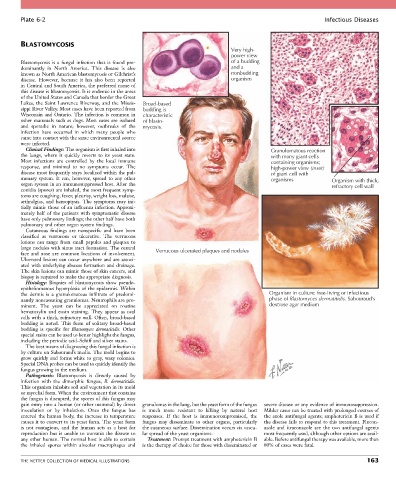
Plate 6-2                                                                                                Infectious Diseases


        BLASTOMYCOSIS
                                                                                 Very high-
                                                                                 power view
        Blastomycosis  is  a  fungal  infection  that  is  found  pre-           of a budding
        dominantly  in  North  America.  This  disease  is  also                 and a
        known as North American blastomycosis or Gilchrist’s                     nonbudding
        disease.  However,  because  it  has  also  been  reported               organism
        in Central and South America, the preferred name of
        this disease is blastomycosis. It is endemic in the areas
        of the United States and Canada that border the Great
        Lakes,  the  Saint  Lawrence  Riverway,  and  the  Missis-  Broad-based
        sippi River Valley. Most cases have been reported from   budding is
        Wisconsin  and  Ontario.  The  infection  is  common  in   characteristic
        other mammals such as dogs. Most cases are isolated   of blasto-
        and  sporadic  in  nature;  however,  outbreaks  of  the     mycosis.
        infection  have  occurred  in  which  many  people  who
        came into contact with the same environmental source
        were infected.
          Clinical Findings: The organism is first inhaled into                                Granulomatous reaction
        the  lungs,  where  it  quickly  reverts  to  its  yeast  state.                       with many giant cells
        Most  infections  are  controlled  by  the  local  immune                              containing organisms;
        response,  and  minimal  to  no  symptoms  occur.  The                                 high-power view (inset)
        disease most frequently stays localized within the pul-                                of giant cell with
        monary  system.  It  can,  however,  spread  to  any  other                            organisms            Organism with thick,
        organ system in an immunosuppressed host. After the                                                         refractory cell wall
        conidia (spores) are inhaled, the most frequent symp-
        toms are coughing, fever, pleurisy, weight loss, malaise,
        arthralgias,  and  hemoptysis.  The  symptoms  may  ini-
        tially mimic those of an influenza infection. Approxi-
        mately  half  of  the  patients  with  symptomatic  disease
        have only pulmonary findings; the other half have both
        pulmonary and other organ system findings.
          Cutaneous  findings  are  nonspecific  and  have  been
        classified  as  verrucous  or  ulcerative.  The  verrucous
        lesions  can  range  from  small  papules  and  plaques  to
        large nodules with sinus tract formation. The central   Verrucous ulcerated plaques and nodules
        face  and  nose  are  common  locations  of  involvement.
        Ulcerated lesions can occur anywhere and are associ-
        ated with underlying abscess formation and drainage.
        The skin lesions can mimic those of skin cancers, and
        biopsy is required to make the appropriate diagnosis.
          Histology:  Biopsies  of  blastomycosis  show  pseudo-
        epitheliomatous  hyperplasia  of  the  epidermis.  Within
        the  dermis  is  a  granulomatous  infiltrate  of  predomi-                           Organism in culture: free-living or infectious
        nantly noncaseating granulomas. Neutrophils are pro-                                  phase of Blastomyces dermatitidis. Sabouraud’s
        minent.  The  yeast  can  be  appreciated  on  routine                                dextrose agar medium
        hematoxylin  and  eosin  staining.  They  appear  as  oval
        cells with a thick, refractory wall. Often, broad-based
        budding  is  noted.  This  form  of  solitary  broad-based
        budding  is  specific  for  Blastomyces  dermatitidis.  Other
        special stains can be used to better highlight the fungus,
        including the periodic acid–Schiff and silver stains.
          The best means of diagnosing this fungal infection is
        by culture on Sabouraud’s media. The mold begins to
        grow quickly and forms white to gray, waxy colonies.
        Special DNA probes can be used to quickly identify the
        fungus growing in the medium.
          Pathogenesis:  Blastomycosis  is  directly  caused  by
        infection  with  the  dimorphic  fungus,  B.  dermatitidis.
        This organism inhabits soil and vegetation in its mold
        or mycelial form. When the environment that contains
        the fungus is disrupted, the spores of this fungus may
        gain entry into a human (or other mammal) by direct   granulomas in the lung, but the yeast form of the fungus   severe disease or any evidence of immunosuppression.
        inoculation  or  by  inhalation.  Once  the  fungus  has   is  much  more  resistant  to  killing  by  natural  host   Milder cases can be treated with prolonged courses of
        entered the human body, the increase in temperature   responses.  If  the  host  is  immunocompromised,  the   the azole antifungal agents; amphotericin B is used if
        causes it to convert to its yeast form. The yeast form     fungus  may  disseminate  to  other  organs,  particularly   the disease fails to respond to this treatment. Flucon-
        is  not  contagious,  and  the  human  acts  as  a  host  for   the cutaneous surface. Dissemination occurs via vascu-  azole  and  itraconazole  are  the  two  antifungal  agents
        reproduction  but  is  unable  to  transmit  the  disease  to   lar spread of the yeast organisms.  most frequently used, although other options are avail-
        any other human. The normal host is able to contain   Treatment: Prompt treatment with amphotericin B   able. Before antifungal therapy was available, more than
        the  inhaled  spores  within  alveolar  macrophages  and   is the therapy of choice for those with disseminated or   80% of cases were fatal.


        THE NETTER COLLECTION OF MEDICAL ILLUSTRATIONS                                                                          163

